
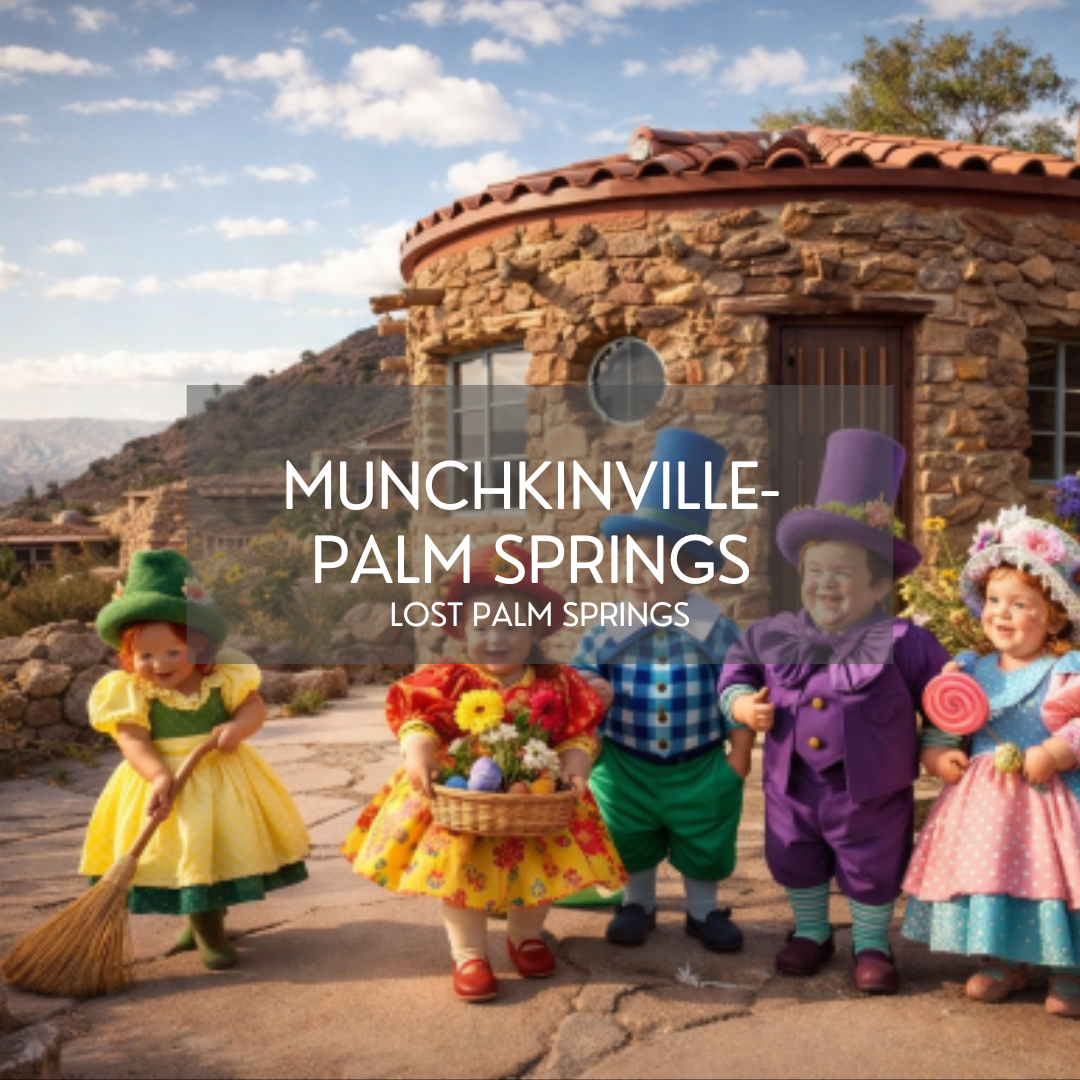
Munchkinville: How a Palm Springs Legend Refused to Die 🏡
Palm Springs has never met a rumor it didn’t like — especially one best told with a cocktail in hand. In this installment of Lost Palm Springs, a series by The Paul Kaplan Group, we’re unpacking one of the desert’s most persistent bits of folklore. If you’ve been here long enough, you’ve heard it:“There was a secret compound of little people hidden in the hills above Palm Springs.”
The story usually comes with dramatic pauses, vague directions (“somewhere past South Palm Springs”), and occasionally a reference to Hollywood, The Wizard of Oz, or a friend of a friend who definitely saw it once.
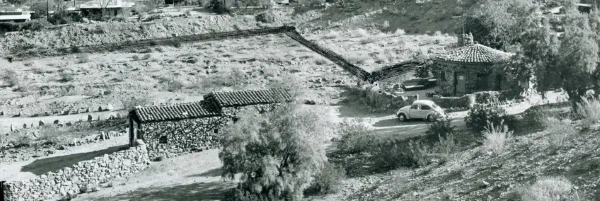
The Araby Rock Houses in the 1970s. The other rock houses are to the right outside the frame. | Courtesy of Palm Springs Historical Society. All Rights Reserved.
So… was it real?
Short answer: no.Long answer: the homes that inspired the rumor absolutely are — and they’ve even been on the MLS recently.
The Legend (Best Told After a Cocktail)
The tale goes like this: a hidden enclave of tiny homes tucked into the desert hillside, built specifically for little people — sometimes even rumored to be connected to Hollywood performers.
Locals dubbed it Munchkinville, or more currently, Hobbit Town, and for years it lived on as one of those stories that felt just believable enough to keep circulating.
Mysterious? Yes.Documented? Not even close.
There is no historical evidence — no permits, no ownership records, no census data — that Palm Springs ever had a residential compound built for little people.
But the myth didn’t come out of nowhere.
The Real Homes Behind the Story
High in the hills of the Araby area, you’ll find a small group of unusual stone homes that look like something straight out of a desert fairy tale.
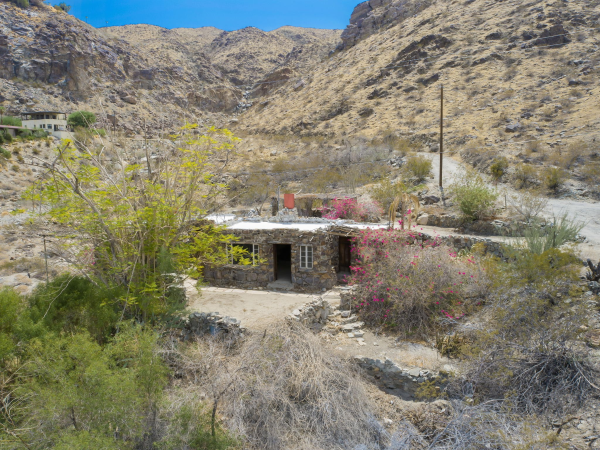
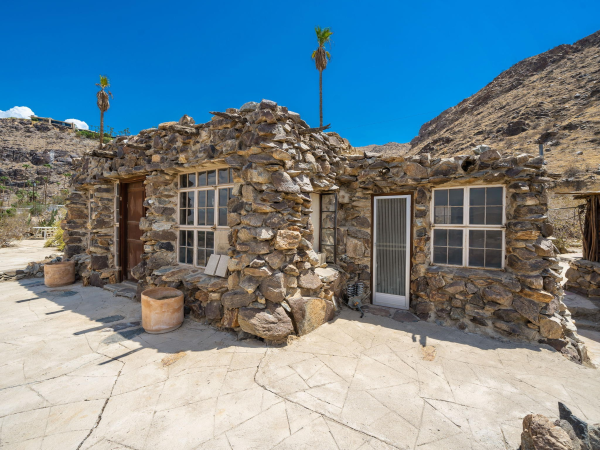
These are the Araby Rock Houses, built in the 1920s and 1930s by R. Lee Miller, a self-taught builder who used native stone, reclaimed materials, and a lot of ingenuity to create modest desert dwellings carved directly into the hillside.
R. Lee Miller is one of those early Palm Springs characters who should be better known — a hands-on builder, desert tinkerer, and accidental legend whose work helped spark one of the town’s most persistent myths.
He wasn’t an architect in the formal sense. He didn’t leave behind glossy portfolios or mid-century manifestos. What he did leave behind were small, stone-built homes tucked into the Araby hillside, quietly doing their thing for nearly a century.
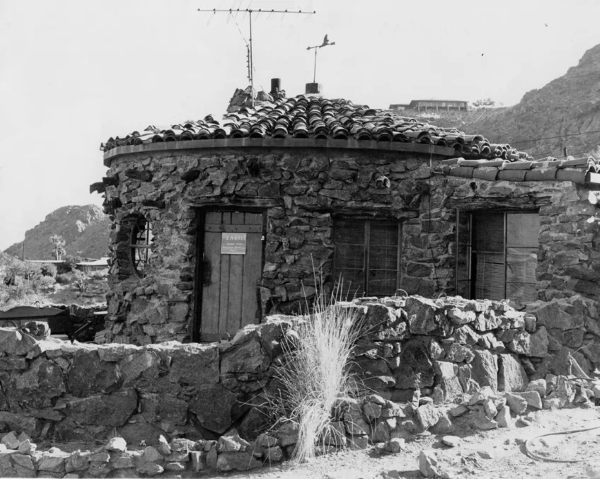
The former home of architect R. Lee Miller. The sign on the door says: "Shanti. Enter with Primitive Bare Feet." | Courtesy of Palm Springs Historical Society. All Rights Reserved.
A Builder Before Palm Springs Was “Palm Springs”
Miller was active mainly in the 1920s and 1930s, back when Palm Springs was still rough around the edges — long before movie stars, golf courses, or Modernism Week.
This was a town of:
- seasonal desert dwellers
- artists and outsiders
- people escaping cities, not performing for them
Miller fit right in.
The original Palm Springs' Tiny Houses
Miller's best-known work is the cluster of homes now called the Araby Rock Houses, built into the hills of the Araby area. Using native stone, reclaimed lumber, and whatever materials were available, Miller created modest dwellings that hugged the land instead of fighting it.
They were:
- compact and efficient
- naturally insulated by rocks from desert heat.
- informal, handmade, and highly site-specific
- Rustic and hand-built
- Integrated into rock outcroppings
In other words, they were practical desert shelters — not novelty homes.
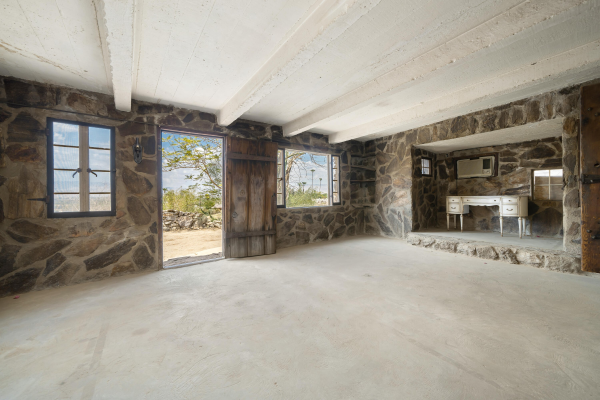
Why the Homes Were Small (and Why That Matters)
One of the reasons Miller’s homes fueled so much rumor is their scale. They’re undeniably smaller than most Palm Springs houses today.They were designed this way because hauling materials uphill was hard, budgets were tight, and desert living was meant to be simple — not because of who lived there.
But that had everything to do with:
- hauling materials up steep hills
- building without heavy machinery
- keeping costs low
- and designing for seasonal desert living
How a Handful of Homes Became a Full-Blown Myth
Palm Springs is the perfect incubator for legends.
Mix together:
- quirky architecture
- a dramatic hillside location
- Hollywood proximity
- privacy-minded owners
- and decades of late-night storytelling
Add time, imagination, and just enough “I heard it from someone who knows,” and suddenly a handful of early desert homes turns into a secret society.
However, these homes had nothing to do with the size of the people living there—a detail that got wildly distorted as stories passed from generation to generation.
And importantly: these homes predate The Wizard of Oz by years. No munchkins involved.

When the Legend Hit the MLS 🏠
After being privately held for decades, some of these historic Araby Rock Houses actually came on the market, which immediately reignited interest—and yes, the rumors too.
Here’s the real, no-nonsense MLS history:
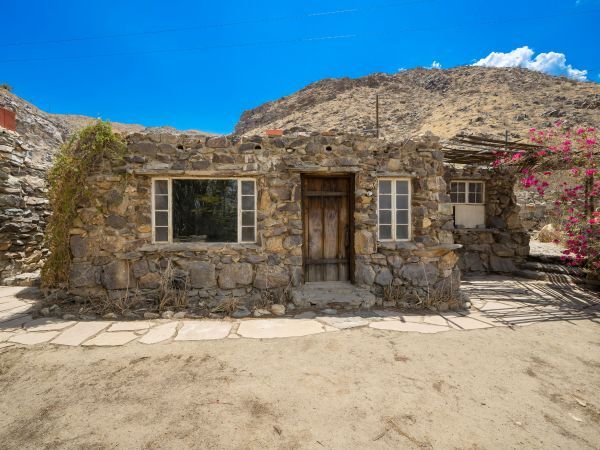
2501 S Araby Drive
- Historic R. Lee Miller rock house
- ~952 sq ft, 2 beds / 1 bath
- Listed originally around $1,000,000
- Multiple price reductions over time
- Sold June 27, 2024 for $599,000
- On market for over 600 days — a reminder that charm doesn’t always mean easy saleListed by Nyla Doering, Desert Sotheby's International Realty; Sold by Alex Dethier of The Paul Kaplan Group
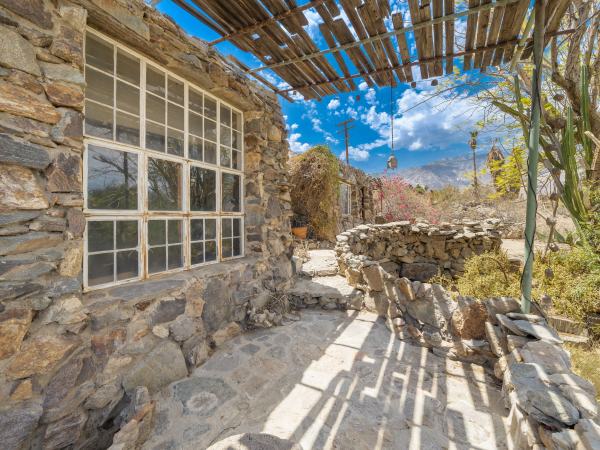
2550 S Araby Drive
- Another companion historic rock home
- Larger at ~1,311 sq ft, 2 baths
- Sold September 16, 2024 for $625,000Listed by: Listed by Nyla Doering, Desert Sotheby's International Realty; Sold by Jason Cochran, Desert Sotheby's International Realty
These sales made headlines not because they confirmed a myth — but because these homes almost never trade, and when they do, they attract outsized attention due to their rarity, condition, and historical significance.
Myth vs. Reality (Final Round)
Let’s be clear:
- ❌ No secret compound
- ❌ No Hollywood munchkin colony
- ❌ No hidden village
But also:
- ✅ Real historic homes
- ✅ Early desert architecture
- ✅ A fascinating, under-told chapter of Palm Springs history
The Araby Rock Houses matter not because of a rumor, but because they represent the era before Palm Springs was polished, glamorous, and perfectly staged — when the desert attracted outsiders, creatives, and people willing to do things differently.
Final Thoughts
So no — Palm Springs never had a little people compound hidden in the hills.
So, while it's a fun part of Palm Springs lore, the idea of Munchkins settling in Palm Springs en masse is more myth than reality. But if you’re curious about the actual homes that sparked the story — and you enjoy offbeat local history — the Araby houses and their builder are far more interesting than the legend itself. They’re still up there, still quietly defying expectations, and still inspiring stories every time they come up for sale.
And honestly?That feels exactly like Palm Springs.
Update: Feb. 2, 2026:
New Rock House Listing! (Listed by Jason Cochran, of Sotheby's International Real Estate
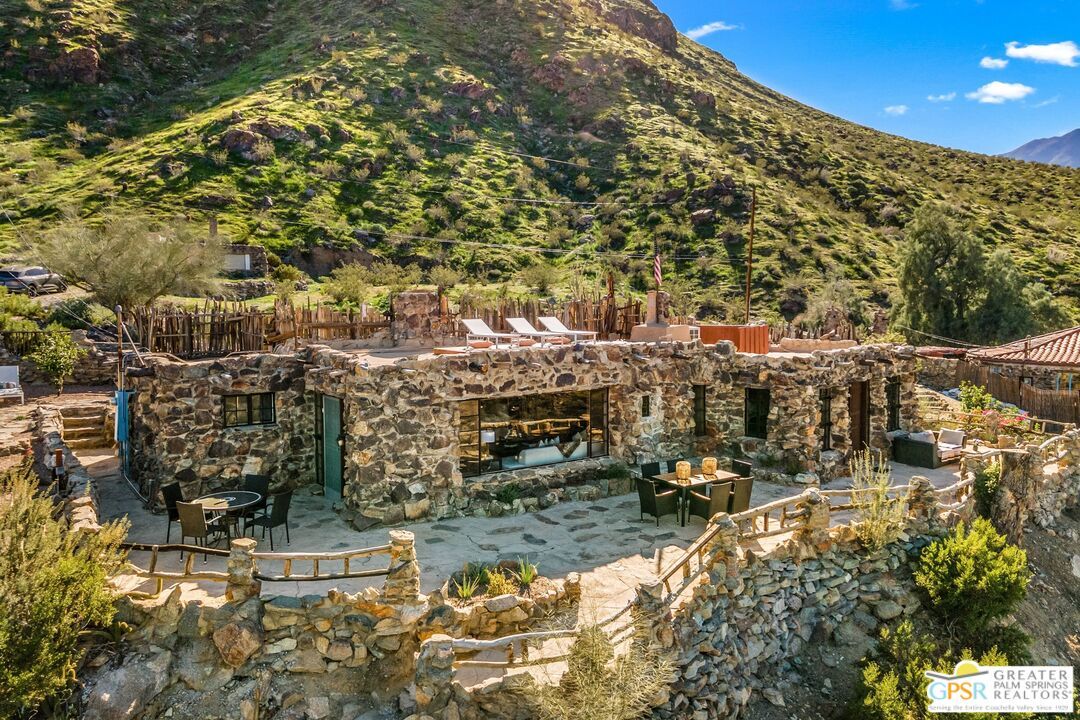
View photos and details here.
Lost Palm Springs is an ongoing exploration of the stories, places, and people that shaped our desert community. While we research each topic carefully, history — especially local history — is rarely static. Details evolve, memories differ, and new information sometimes comes to light. We welcome thoughtful updates, corrections, or personal insights, and appreciate our readers helping keep these stories alive and accurate. Consider this a living archive, always open to refinement.
Sources: Photos courtesy of the listing Sotheby's International Real Estate via The MLS Realtor.com: Rare Pair of Rock Homes in Palm Springs Hit the Market for Less Than $750K a Pop The Real-Life Hobbit Houses of Palm Springs and the Nearly-Forgotten Architect Who Created Them | Artbound | Desert Escapes | PBS SoCal
Selling Your Home?
Get your home's value - our custom reports include accurate and up to date information.