
When Spring Break Took Over the Desert (And Sonny Bono Shut It Down)
Lost Palm Springs
How Palm Springs Became the West Coast Spring Break Capital
There was a time — not so long ago — when Palm Springs wasn’t synonymous with Modernism Week, design tours, or Instagrammable brunches.
It was about sunburns, beer bongs, balcony banners, and all-night cruising down Palm Canyon Drive.
If you were in Palm Springs in the 1980s, you remember the chaos.If you didn’t? Buckle up. Palm Springs in springtime was wild — and it changed the city forever
.png)
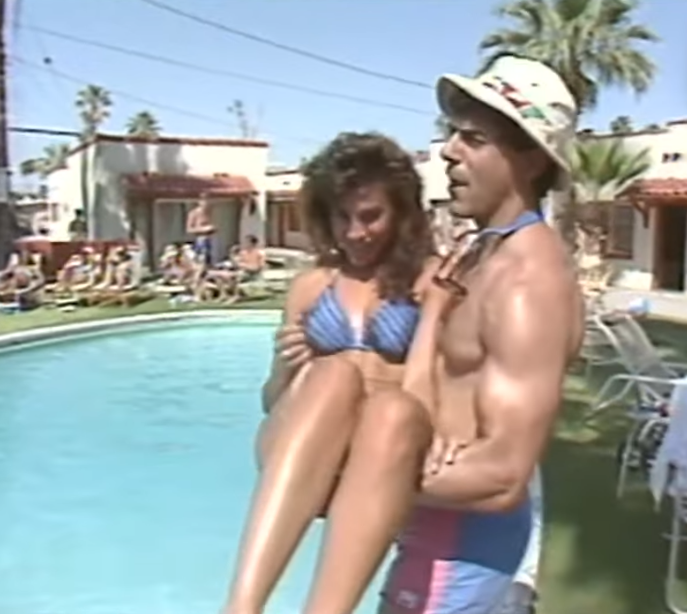
By the early 1980s, Palm Springs had quietly dethroned Fort Lauderdale as the West Coast’s answer to Spring Break madness. The ingredients were simple:
- Just a few hours’ drive from LA, San Diego, and Arizona
- Wallet-friendly motels and apartment-style resorts
- Perpetual sunshine
- A city small enough to feel like you owned the place
Every March and April, tens of thousands of students — from USC, UCLA, Arizona State, and even Midwest schools — descended on the desert. Some years, crowds topped 100,000, quadrupling the local population.
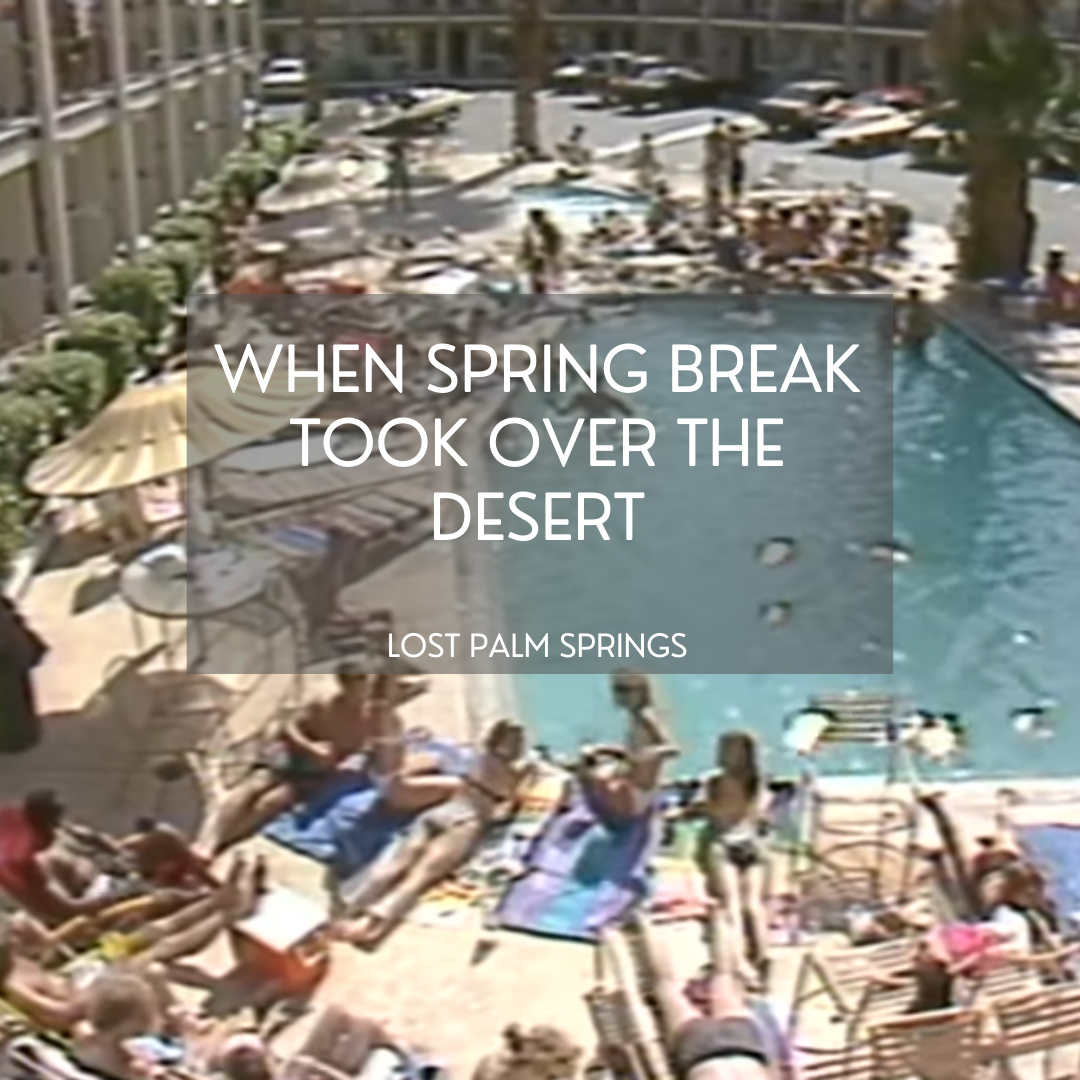
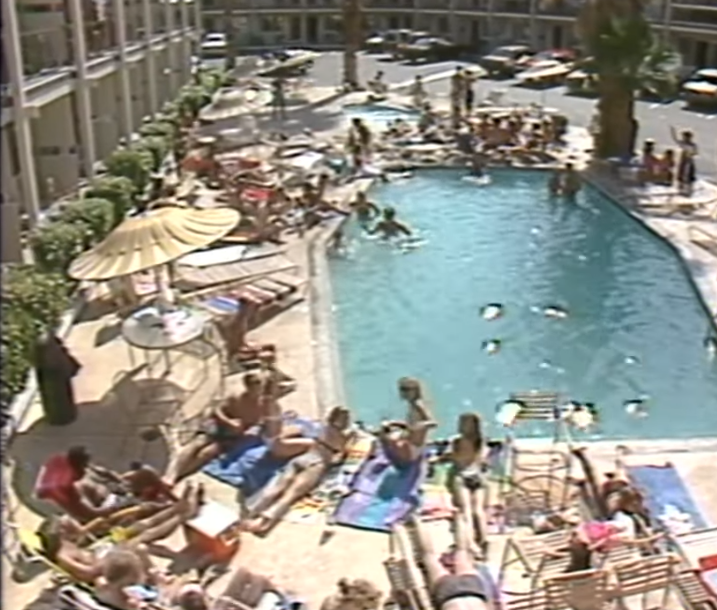
Hotels that once promised “serenity” pivoted to pool DJs and beer specials. Lawns vanished beneath seas of coolers. Courtyards pulsed with top 40 hits and the scent of coconut oil.
And then there was East Palm Canyon Drive: a stretch of motels that would become legendary.
“Sorority Row” – The Infamous Hotel Strip
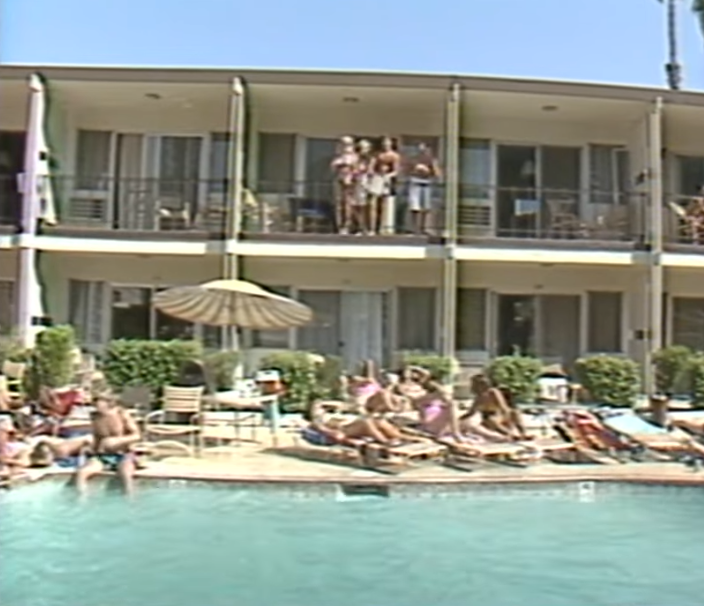
Locals dubbed it Sorority Row — a corridor on East Palm Canyon Drive where motels like the Howard Johnson (now the Ace Hotel and Swim Club), Palm Springs Travelodge, Desert Lodge (now the V Palm Springs), and Royal Sun Inn (still The Royal Sun, recently renovated!) became ground zero for mayhem.
.png)
Entire sororities and fraternities blocked off every room. Balconies were draped with Greek letters. Pool decks became dance floors, packed all day and night. Security? Out numbered, outmaneuvered, and occasionally enlisted as party referees.
What had once been mellow midcentury hideaways now felt like live MTV broadcasts.
Palm Springs became PARTY CENTRAL! When they weren't hitting the pool, they were cruising the Canyon - Palm Canyon Drive -
Cruising Palm Canyon Drive: The Endless Parade
If the hotel pools were the daytime stage, Palm Canyon Drive was the nighttime arena.
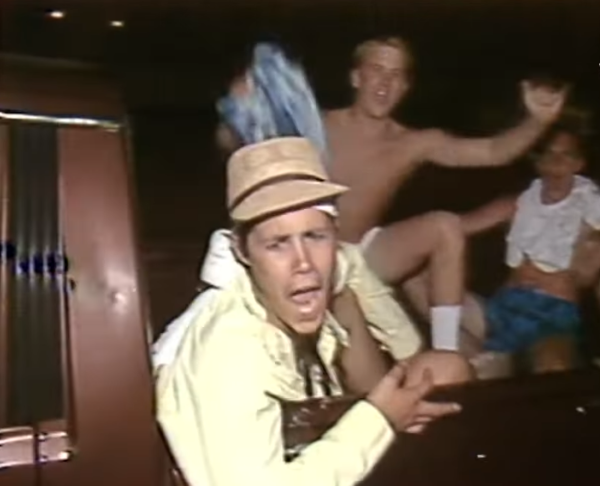
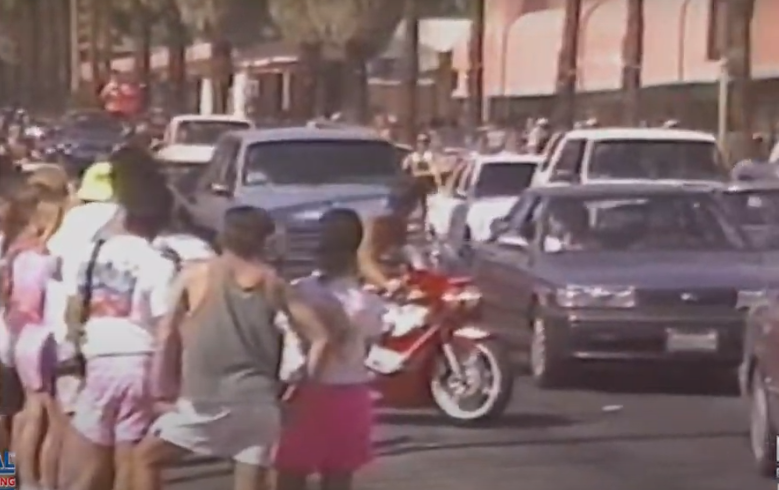
By sunset, students would start migrating downtown. Radios cranked up. Convertible tops down. Undoubtedly, there was someone standing on the back seat. Cars didn’t “drive” Palm Canyon Drive — Traffic slowed to a crawl—intentionally. Five miles an hour, maybe less.
.png)
The whole spectacle played out in downtown Palm Springs. As the desert cooled each night, students flooded Palm Canyon Drive, piling into rented convertibles and jeeps. Music thumped. People stood on seats, shouted, flirted, and waved signs.
Mustangs. Camaros. Jeep Wranglers. The occasional limo. Windows down. Music blasting — Bon Jovi, Prince, Madonna, whatever was dominating 1980s radio. Strangers yelling compliments from car to car. Whistles. Cheers. Arms raised in the air like every block was a victory lap. Palm Canyon became a slow-rolling parade. Locals watched from the sidewalk. Cops tried (and mostly failed) to keep order.
Sidewalks were just as packed. Spectators lined both sides of the street watching the automotive parade inch forward. It felt like Mardi Gras without the beads — though honestly, sometimes there were beads.
Desert Sun File Photo
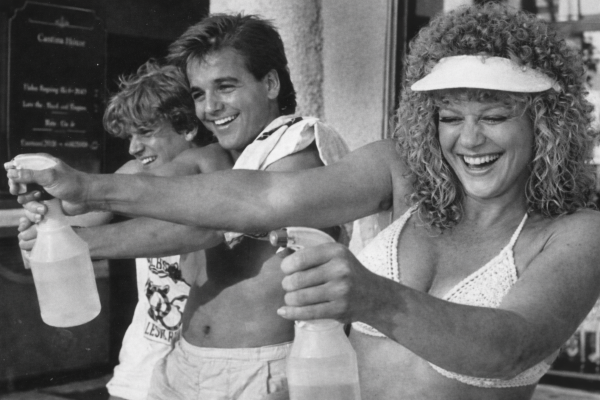
Cruising wasn’t about getting anywhere. It was about being seen. And also being cooled off by water guns! Squirt bottles and water balloons became part of the spring break tradition.
And then there were the beer funnels. Someone always had one. Plastic funnels with long tubes snaking into the back seat. Coolers wedged between legs. The ritual was theatrical — cheers building as someone tilted their head back while the car idled in traffic. Applause when it was done. Repeat at the next red light.
It was reckless. It was loud. It was pure 1980s excess.
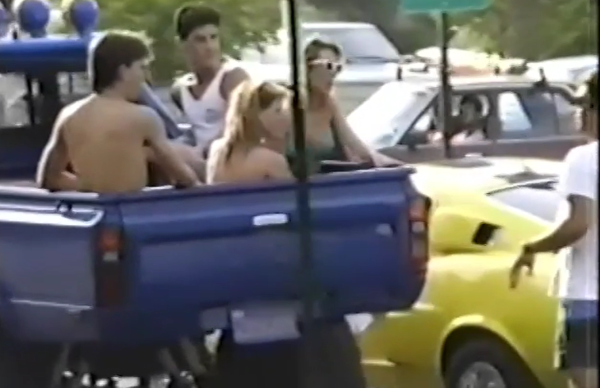
However,by the late ‘80s, the energy turned tense. Alcohol was everywhere. Fights and vandalism spiked. And then came the nights that would tip everything over.
My Spring Break Memories: Cruising, Crowds, and Good Times!
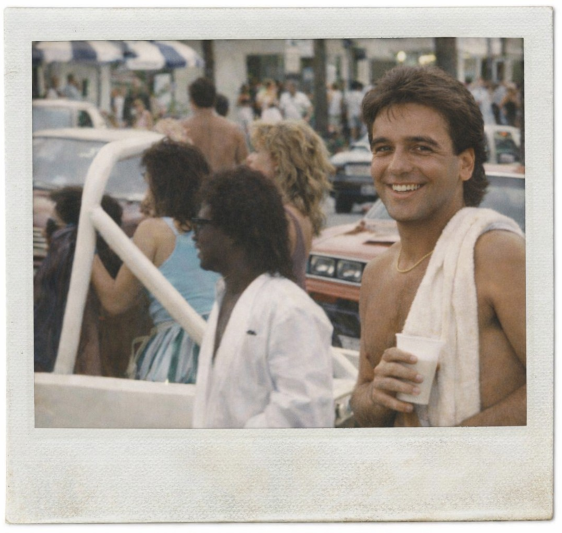
I recall those exhilarating spring breaks vividly. Participating in the annual Palm Springs festivities was not just a choice, but an essential part of our college experience. Every March, my friends and I would pile into whatever car was running (shoutout to the infamous green Pinto—no jokes about “four steaks in a Pinto,”), crank up the music, and head straight for Palm Canyon Drive.
Cruising was the main event. It wasn’t unusual for it to take two hours just to make the loop—up Indian Canyon, down Palm Canyon, and right back around again. The streets were absolutely packed, lined with half-naked college guys flexing and scantily clad girls waving from balconies and sidewalks. It was electric—rowdy, sweaty, sunburned, and totally unforgettable. (Thank God we didn't have selfies back then!)
Finding a place to stay was a challenge in itself. You couldn’t book a room without a hefty deposit—and that’s if you could even snag one. Most of us ended up cramming six or more people into a single motel room, sleeping on the floor, couches, or wherever we could find a spot. Eventually, the motels caught on and started tightening the rules: no bookings if you were under 25. That put a serious damper on the party.
Still, those were some of the best times. We’d always joke (with more than a hint of truth) that “Sonny Bono ruined everything!” when the crackdown finally came. The party ended, we all graduated college, but the memories never faded.
When the Parties Turned to Riots
By the end of the decade, the wild fun sometimes spilled into chaos. Crowds clogged Palm Canyon Drive. Brawls broke out. Cars were rocked or vandalized.
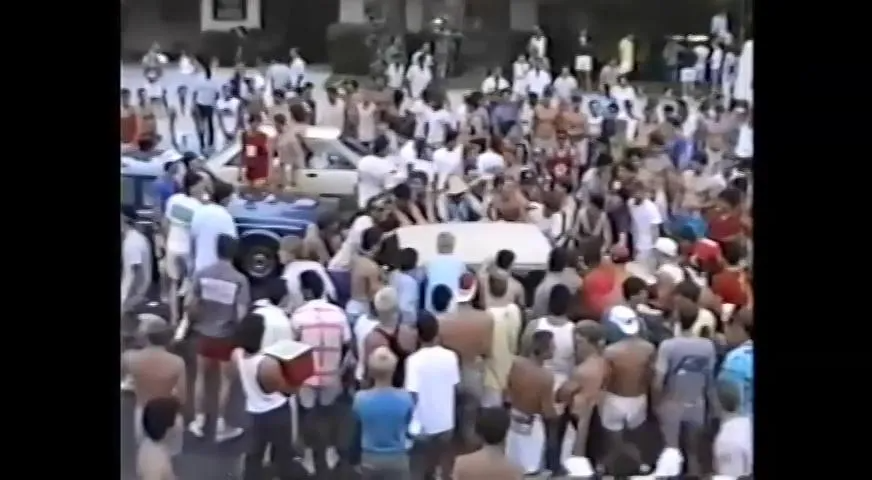
Some spring break weekends ended in what locals called riots: mass arrests, smashed storefronts, and dramatic news headlines.
The Palm Springs - Spring Break Riot
Then Saturday, March 29, 1986, happened. Police called for reinforcements. and ultimately the annual Palm Springs tradition was ruined.VIDEO: The spring break riot that changed Palm Springs
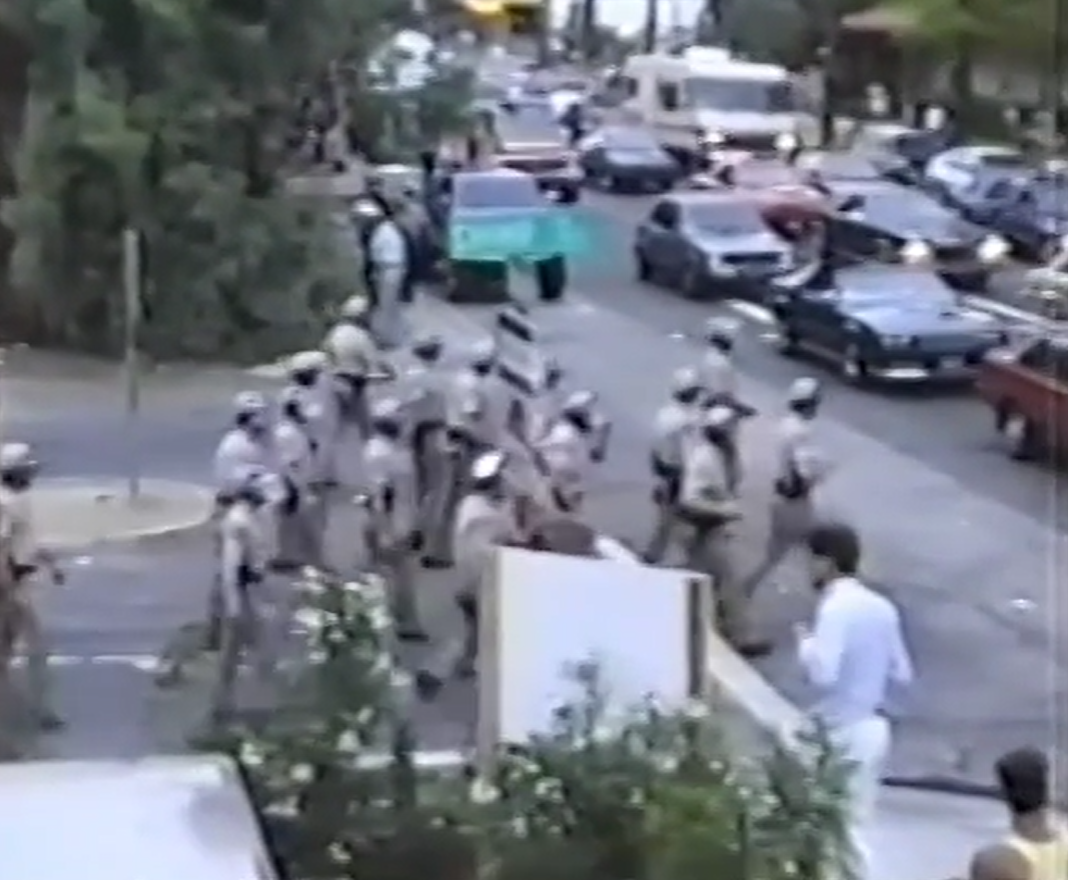
Large crowds of college students gathered on Palm Canyon Drive for spring break celebrations sparked the riot. As the night wore on, the atmosphere became increasingly tumultuous, marked by crowded streets, people jumping on vehicles, and the tossing of bottles. Violence erupted, prompting police to don riot gear and arrest numerous individuals. Several businesses and vehicles suffered damage during the unrest. Local residents and leaders expressed considerable outrage over the incident, believing it jeopardized the city's reputation. Residents were furious — and scared. Retirees who had chosen Palm Springs for peace and sunshine suddenly found themselves living in the middle of a college tailgate.The city’s image, and future, were at stake.
.png)
In response, Palm Springs implemented significant policy changes, such as alcohol bans, restrictions on cruising, and a heightened police presence, effectively ending its status as a spring break destination. As the complaints piled up, city leaders responded with a string of new ordinances.
The Thong Swimsuit Ban (Yes, Really)
Most infamous? One of the most infamous ordinances was the prohibition on wearing thong bathing suits in public areas. As swimwear got skimpier at pools and on the streets, city hall drew a line. The “thong ban” made national headlines, symbolizing a generational and cultural clash between locals and partying students.
Local history reporting from Palm Springs Life notes that during the height of Spring Break, “girls riding on the back of motorcycles in string bikinis” became such a distraction that officers cited it as a factor in accidents — and it was part of the reasoning behind later bans on string bikinis and motorcycles on Palm Canyon Drive.
Yes, that actually happened.
Enter Sonny Bono
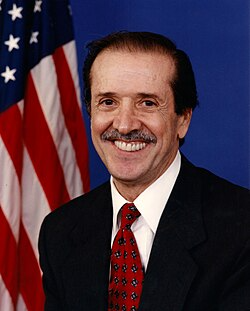
In 1988, entertainer-turned-politician Sonny Bono was elected mayor.
He inherited a city in crisis — beloved by college kids, loathed by many locals. Bono was blunt: Palm Springs needed to reclaim its reputation as a world-class resort, not a spring break circus.
He took action:
- Alcohol banned in public spaces
- Cruising restricted on Palm Canyon Drive
- Police presence ramped up
- Hotels forced to tighten booking and security policies
- Citywide effort to discourage spring break promotion
The message was clear:The party was over.
And almost overnight, the crowds vanished.
.png)
The End of an Era
By the early ‘90s, spring break in Palm Springs was history.
Lake Havasu and Cabo picked up the college crowds. Insurance for desert hotels soared. Police patrols stayed vigilant.
Palm Springs pivoted — toward architecture, festivals, and travel for grown-ups.
There’s a delicious irony:The same streets that once echoed with shouted chants and revving engines now host art walks and design tours. The same hotels that survived beer-soaked chaos now market “curated” poolside serenity.
Palm Springs didn’t erase the past — it absorbed it and moved on.
Why This Chapter Still Matters
Spring Break in the 1980s wasn’t just a party.
It was a culture war.A civic identity crisis.A moment when Palm Springs had to decide who it wanted to be.
This chapter belongs in the Lost Palm Springs series because it reveals something deeper about this town: whenever Palm Springs feels out of balance, it reinvents itself.
And I was lucky — or maybe just fortunate — to have witnessed that era firsthand. To have seen Palm Canyon Drive crawling with convertibles. To have watched the rise of “Sorority Row.” To have felt the tension when the city said, enough.
Although those nights have passed, they significantly influenced the Palm Springs we recognize today.
From Rat Pack glamour…to college chaos…to architecture and design paradise…
Palm Springs has never stood still.
And that constant reinvention — that willingness to evolve, to shed one identity and step into another — is exactly what makes its history so irresistible.
That’s why we keep telling these stories.
Resources:
About the Lost Palm Springs Series
The Lost Palm Springs series is not intended to be the definitive account of history.
It’s a collection of stories collected by The Paul Kaplan Group — some documented, some remembered, some passed down over coffee tables and cocktail parties. It’s newspaper clippings, city records, personal memories, and yes… a little bit of hearsay.
Palm Springs has always been a town of storytellers. We do our best to research carefully and verify what we can. But history — especially recent history — is often layered with perspective. If you were there during Spring Break in the 1980s, your version may be slightly different from someone else’s. And that’s okay. In fact, that’s the point.
This is a living document. As new information surfaces, as readers share corrections, photos, memories, or additional details, we update these stories. The goal isn’t perfection — it’s preservation.
If we fail to document these chapters, they will eventually disappear.
From Rat Pack legends to spring break chaos… from shuttered hotels to reinvented neighborhoods… Palm Springs has never stood still. And each reinvention leaves behind a story worth saving.
If you experienced this era — or if you have documents, photos, or clarifications to add — please reach out us at The Paul Kaplan Group. We’d love to hear from you.
Together, we’re preserving Palm Springs history — one story at a time. 🌴
Selling Your Home?
Get your home's value - our custom reports include accurate and up to date information.