
If you plug a Palm Springs address into a national real estate website, the estimated value it spits out is almost guaranteed to be wrong. In most suburbs, an algorithm just looks at square footage, bedroom count, and recent sales down the street. But here in the desert, pricing is an art form that defies standard logic.
We have a unique market driven by three distinct pillars: land ownership type, architectural pedigree, and intense seasonality. You can have two identical mid-century homes on the same street, but if one is on Lease Land and the other is Fee Simple, their values could differ by hundreds of thousands of dollars.
As we navigate the market in 2026, we are seeing a shift toward normalization. The frenzy of past years has settled into a more balanced rhythm, meaning inventory is sticking around a little longer and buyers are more discerning. For sellers, this means accurate pricing is no longer just a suggestion - it is the only way to secure a sale. You need a localized strategy that accounts for the quirks of the Coachella Valley, not just a calculator.
The Valuation Gap: Lease Land vs. Fee Simple
Let's tackle the single biggest factor affecting price in Palm Springs: who owns the dirt underneath the house. Unlike most of the country, over 50% of Palm Springs is built on land owned by the Agua Caliente Band of Cahuilla Indians.
This creates two distinct categories of ownership. Fee Simple means you own the house and the land, just like a traditional deed. Lease Land means you own the structure, but you pay monthly rent for the land it sits on. When you are pricing a home, this distinction is critical. Homes on Lease Land typically list for 20% to 30% less than comparable Fee Simple properties. This isn't a flaw; it's a trade-off. Buyers get "more house for less money" upfront, but they take on a monthly lease payment that can range from $200 to over $800.
When setting your price, you have to think like a buyer calculating their monthly nut. If your home is on lease land, you cannot price it at the same level as the fee simple home next door, or the math won't work for the buyer's mortgage qualification. You have to price aggressively enough to offset that monthly land lease fee.
Another massive variable is the lease expiration date. If the remaining lease term drops below 35 years, many banks will refuse to write a 30-year mortgage on the property. This forces the buyer pool to shrink to cash-only investors or those with specialized financing, which naturally suppresses the sale price. Always check the specific lease documents before deciding on a number.
Timing the Desert Market: Seasonal Pricing Adjustments
Real estate in Palm Springs follows a rhythm that is almost entirely dictated by the thermometer. We have a distinct "Snowbird" selling cycle, and ignoring it can cost you serious leverage.
The "High Season" runs roughly from October through April. The weather is perfect, the town is packed with visitors, and the population swells with part-time residents. This is when demand peaks. During these months, you have more competition from other sellers, but you also have a significantly higher pricing ceiling because the buyer pool is active and emotional.
Then comes the "Summer Slowdown." From May to September, temperatures routinely hit 110°F or higher. Showings drop off a cliff because many buyers physically cannot tolerate house hunting in that heat. If you need to sell during the summer, your pricing strategy must be aggressive. You aren't looking for the casual browser; you are looking for the serious year-round resident or the contrarian investor who wants a deal.
To maximize value, savvy sellers aim to hit the market in mid-October or January. These windows capture the fresh wave of seasonal arrivals. Conversely, listing too high in May is a recipe for disaster. Your listing risks sitting "stale" on the market, accumulating days on market (DOM) until the weather breaks in the fall. Often, a summer listing requires a 5-10% price adjustment compared to what you might get in peak season just to get traffic through the door.
The 'Cool Factor': Pricing Mid-Century Modern (MCM) Homes
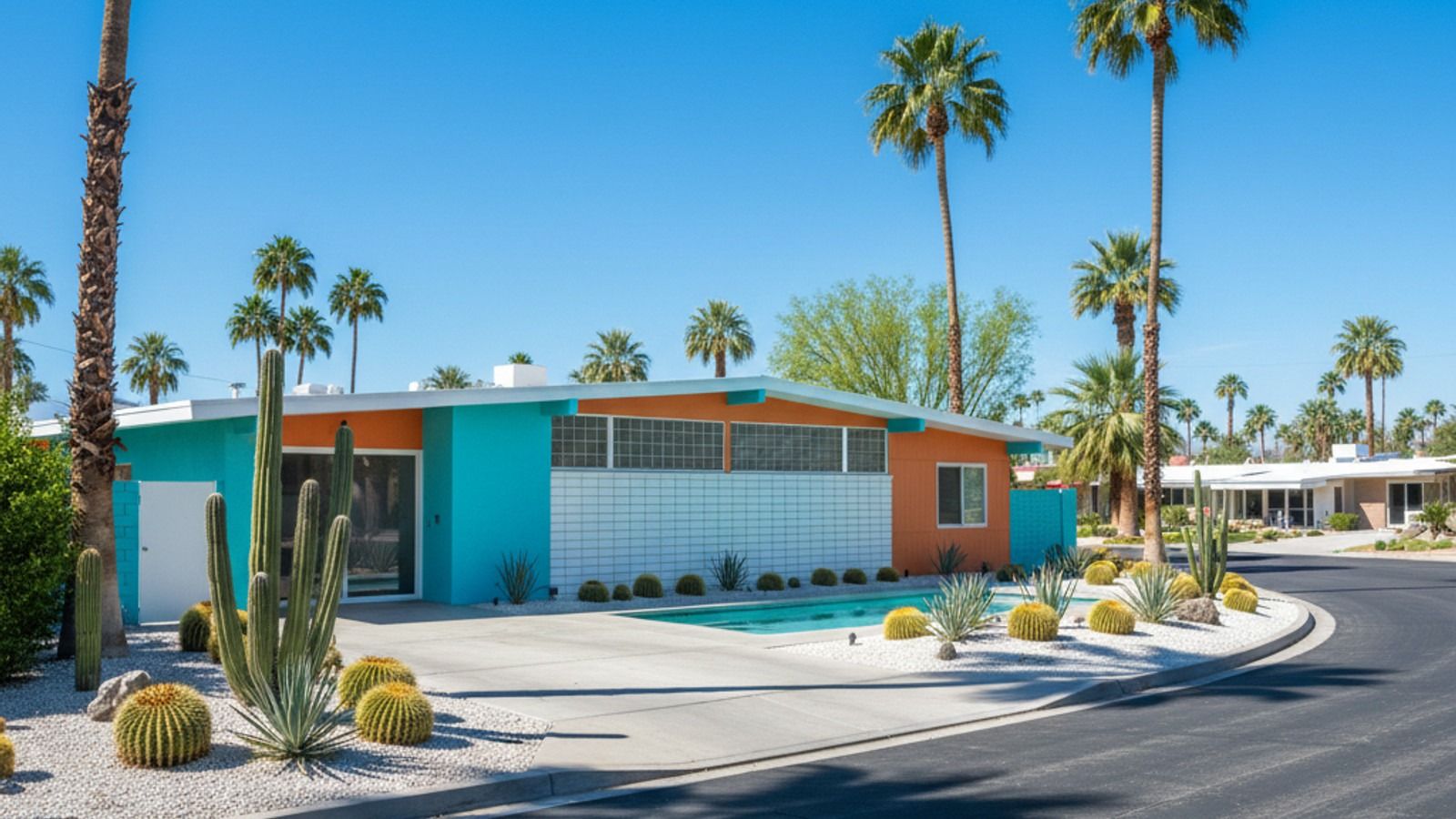
In many cities, a 1,400-square-foot house is just a small house. In Palm Springs, if that 1,400-square-foot house was designed by William Krisel or Donald Wexler, it’s a collector's item.
Standard price-per-square-foot metrics often fail when applied to Mid-Century Modern (MCM) homes. Buyers here pay a premium for "vibes" and pedigree. A home with signature architectural details - like butterfly roofs, clerestory windows, or post-and-beam construction - commands a valuation far higher than a generic stucco ranch of the same size. If you can validate the home’s provenance with original blueprints or historical designation, that adds tangible value, almost like a brand name.
However, condition is the great equalizer. There is a massive price difference between a "time capsule" that has been authentically restored and a "bad flip" where someone stripped out the original cabinets and put in grey vinyl flooring. Authentic restoration commands the highest price per foot in neighborhoods like Twin Palms or Racquet Club Estates.
Staging also plays a huge role in justifying a high price tag. You aren't just selling a house; you're selling the Mad Men lifestyle. Appropriate mid-century furniture and art help buyers emotionally connect with that higher price point, making them feel like they are walking into a piece of history rather than just a used building.
Regulatory Pricing: The Impact of Short-Term Rental Rules
For years, investors flocked here to turn homes into vacation rentals, but regulations have changed the landscape. Measure J and various neighborhood caps have made the ability to host short-term rentals (STRs) a major pricing variable.
If your home has a grandfathered STR permit or is located in a zone or HOA that explicitly allows rentals, it carries a "Permit Premium." These homes are income-generating assets, and investors will pay more for them. In these cases, it is smart to price the home based on its Cap Rate - its potential return on investment - rather than just comparable sales.
On the flip side, if your home is in a restricted zone or a neighborhood like Deepwell or Las Palmas where rental caps are often met, you cannot market it to the pure Airbnb investor. You must price it for the owner-occupier or the long-term seasonal tenant. The value here is in the lifestyle, privacy, and community, not the nightly rental income.
Transparency is your best friend here. If you are selling an active rental, provide clear, documented rental history. Buyers are wary of inflated projections. Real numbers justify real prices.
Strategic Pricing Tactics for a Balanced Market
Beyond the unique local factors, basic pricing psychology still applies, but it needs to be tuned for our current economic climate.
First, consider the psychology of search filters. Pricing a home at $995,000 versus $1,005,000 might seem like a small difference, but it determines which price brackets you appear in. Staying just under a major benchmark often captures more eyeballs.
In high-demand neighborhoods, we sometimes see the "Auction Effect." This involves pricing the home slightly below market value to generate multiple offers. In a balanced market like we have in 2026, this can create urgency where there otherwise might be none.
If you don't get traction, move decisively. If a home hasn't received an offer in 21 days, the market is speaking to you. A calculated price adjustment is better than a slow bleed of small cuts over six months.
Finally, don't forget the HOA fees. Palm Springs has many stunning condo communities, but some come with high monthly dues. If your HOA fee is $800 a month, that impacts the buyer's purchasing power. You may need to list at a slightly lower purchase price to keep the total monthly payment attractive compared to a single-family home with no HOA.
FAQs: Real Estate Pricing in Palm Springs
How does 'Lease Land' affect my home's list price?
Homes on Lease Land generally list for 20-30% less than comparable Fee Simple homes because the buyer does not own the land. You must price the home lower to compensate for the monthly lease payments the buyer will inherit. It is crucial to disclose the lease amount and expiration date upfront, as these directly impact the buyer's monthly budget and financing options.
Is winter really the best time to sell in Palm Springs?
Yes, winter (October through April) is the prime selling season because the weather attracts "snowbirds" and vacationers, increasing the buyer pool. Selling in the summer is harder due to extreme heat (often 100°F+), which significantly reduces foot traffic and showings. If you list in summer, expect to price more aggressively to attract year-round locals or investors.
Do solar panels increase home value in the desert?
Absolutely. With air conditioning being a survival requirement in the desert, electricity bills can be massive in the summer. Owned solar systems (not leased) are a major selling point and can justify a higher list price because they lower the total cost of ownership for the buyer.
How do short-term rental restrictions impact property value?
Homes in neighborhoods where short-term rentals are permitted or that hold grandfathered permits often command a premium because they offer income potential. Conversely, homes in restricted areas must be priced for owner-occupiers, as they cannot be sold as turnkey Airbnb businesses. The difference in value often comes down to the projected revenue the property can generate.
Selling Your Home?
Get your home's value - our custom reports include accurate and up to date information.