
Palm Springs: The Jeweled Showcase of Mobile Living
How Midcentury Mobile Home Parks Quietly Shaped Desert Modernism
Lost Palm Springs is about more than vanished buildings. It’s about forgotten ideas—moments when Palm Springs quietly led the nation, only for the story to fade as tastes, terminology, and land values changed.
Few chapters fit that mission better than the city’s midcentury mobile home parks.
In the 1950s and 1960s, Palm Springs was celebrated nationwide as the “jeweled showcase of mobile living.” Long before “tiny homes,” “ADUs,” or “downsizing by design” entered the conversation, the desert had already embraced compact living as a modern, stylish, community-driven lifestyle—one that aligned perfectly with the principles we now celebrate during Modernism Week.
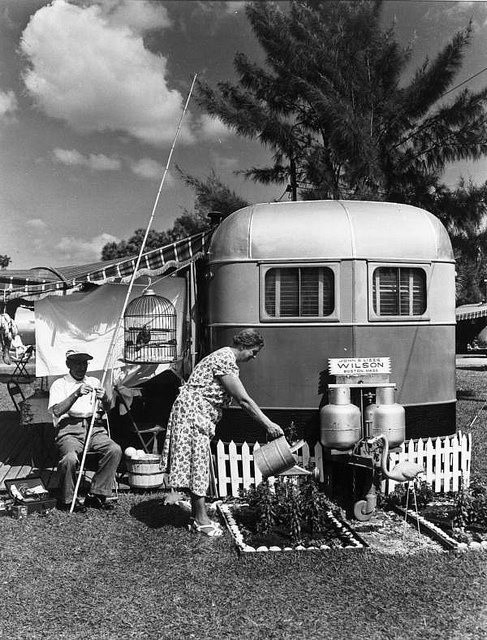
Mobile Living Meets Desert Modernism
Postwar America was mobile, optimistic, and design-curious. Trailers and early mobile homes offered efficient floor plans, built-in furniture, and seamless indoor-outdoor flow—values shared by the best examples of Desert Modernism.
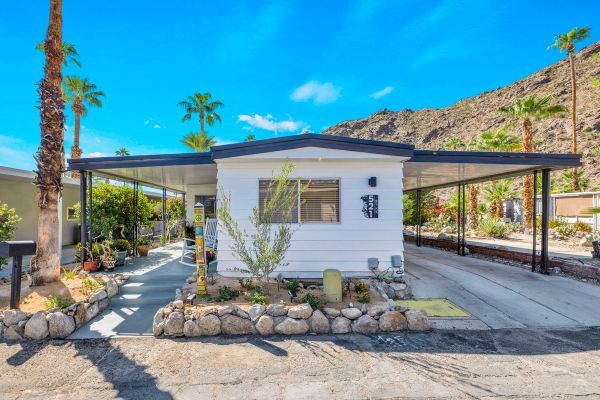
The idea of wintering in the desert—what we now casually call being a snowbird—has deep roots in Palm Springs history. In the early years, seasonal migration was largely the domain of the wealthy, who could afford extended stays to escape harsh northern winters. Palm Springs earned its reputation as a playground for the Hollywood elite. But after World War II, that pattern began to shift. As the American middle class expanded and leisure travel became more attainable, everyday families followed the same sun-seeking path as the rich and famous.
Palm Springs provided the ideal testing ground:
- Mild winters encouraged outdoor living
- Flat land allowed for thoughtful site planning
- A design-forward culture welcomed experimentation
- Seasonal residents were open to nontraditional housing
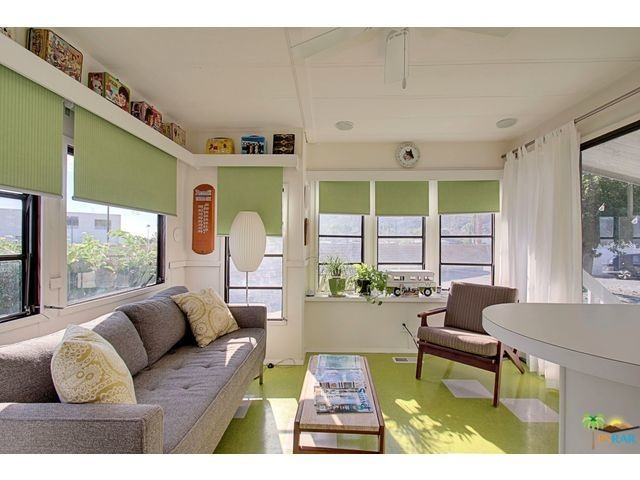
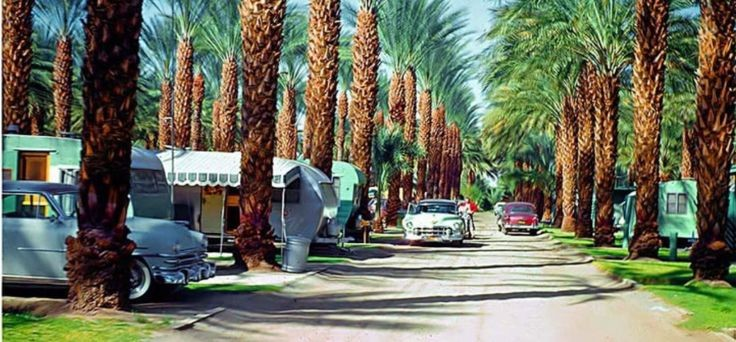
More than 32 trailer parks in the Coachella Valley welcomed these visitors as old friends and provided a wide degree of luxury at a space rented for as low as $25 to well over $100 a month. Each park was a community unto itself, including its own stores, cafes, and barber and beauty shops as well as a full program of entertainment and activities.
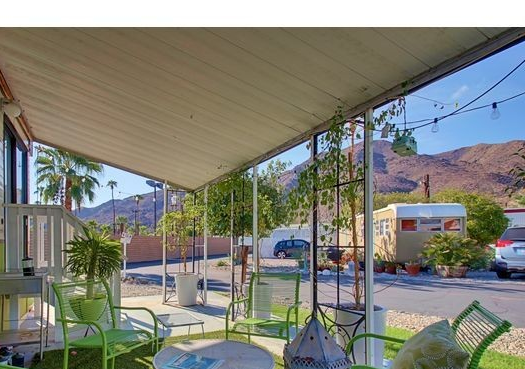
Modernism Week audiences are well acquainted with this moment through the lens of Alexander Construction Company homes, which helped democratize modern design by offering thoughtfully designed, mass-produced housing to a broader audience. What is discussed less often—but is equally important to understanding Palm Springs—is how mobile home parks played a parallel role. Mobile homes, some owned or inhabited by the rich and famous themselves, provided an even more accessible entry point into desert living. Like Alexander homes, they embraced efficiency, indoor-outdoor living, and modern aesthetics—while opening the Palm Springs lifestyle to people who might never have been able to afford a custom modernist house. Together, these two housing models reshaped who could participate in the desert dream, making mobile home communities an essential, if often overlooked, chapter of Palm Springs’ modernist story.
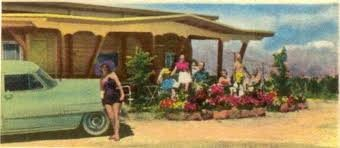
As The Desert Sun and Palm Springs Life have documented, Palm Springs didn’t treat trailer parks as temporary or disposable. Instead, many were master-planned communities, carefully landscaped and socially programmed, with architecture playing a central role.
By the late 1950s, approximately 32 trailer parks existed throughout the Coachella Valley, many within Palm Springs itself.
Clubhouses: The Architectural Heart of the Parks
What truly set Palm Springs’ mobile home parks apart—and what deserves far more attention today—were their clubhouses.
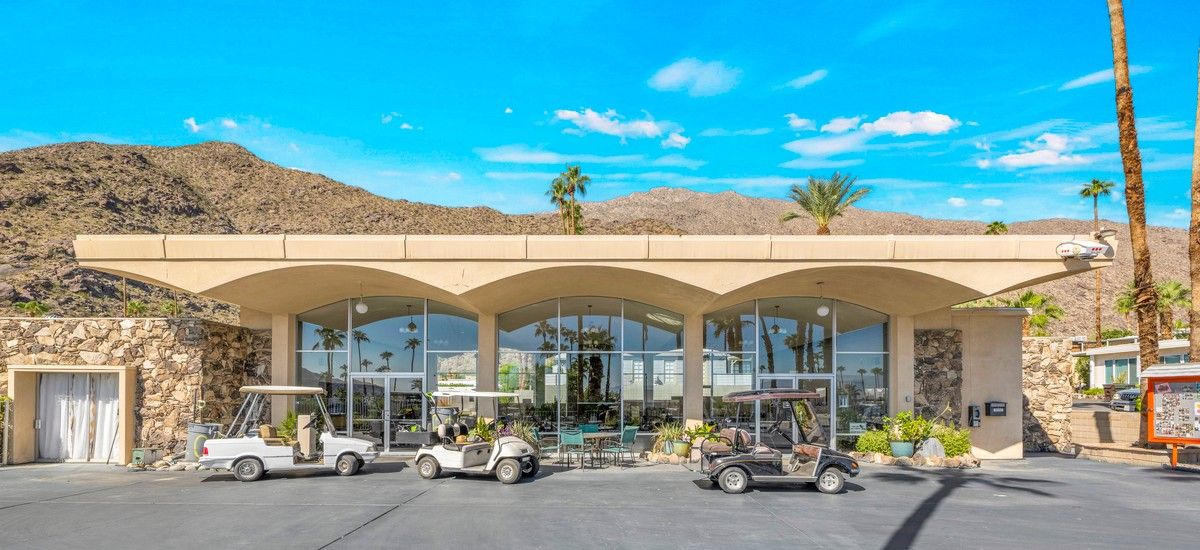
These were not afterthoughts. In many parks, the clubhouse functioned as the social, architectural, and symbolic centerpiece, echoing the role of community buildings in larger residential developments.
Features often included:
- Open-beam ceilings
- Expanses of glass
- Breezeway connections
- Indoor-outdoor gathering spaces
- Poolside orientations and shaded patios
Some clubhouses were designed by noted architects or firms familiar with modernist principles, reinforcing the idea that these parks were legitimate architectural projects—not marginal housing.
Shuffleboard tournaments, potlucks, dances, performances, and meetings all revolved around these buildings. In many ways, the clubhouse was the modernist living room, scaled to community rather than family.
Notable Midcentury Mobile Home Parks of Palm Springs
Among the best-documented parks from this era:
- Rancho Trailer Park (Demolished)1563 S. Palm Canyon Drive, Palm SpringsA prominent early park along the Palm Canyon corridor.
- Orchard Trailer Park (Orchard Trailer Villa) - (Demolished)1862 S. Palm Canyon Drive, Palm SpringsCentrally located and emblematic of semi-permanent mobile living.
- McKinney’s Palm Canyon Court & Trailer Park - (Demolished)634 S. Palm Canyon Drive, Palm SpringsBridging tourism and long-term residency.
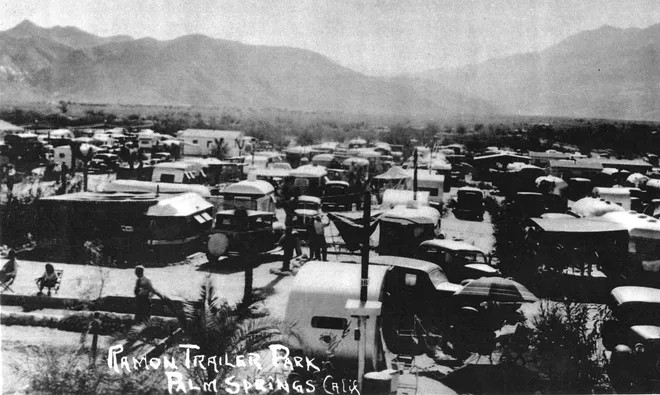
- Ramon Trailer Park (now Ramon Mobile Home Park & RV) (Existing)1441 E. Ramon Road, Palm SpringsOne of the most influential mobile home parks in California.
- Sahara Trailer Park (now Sahara Mobile Home Park) (Existing)1955 S. Camino Real, Palm SpringsThe park has received national recognition for its innovation and design.
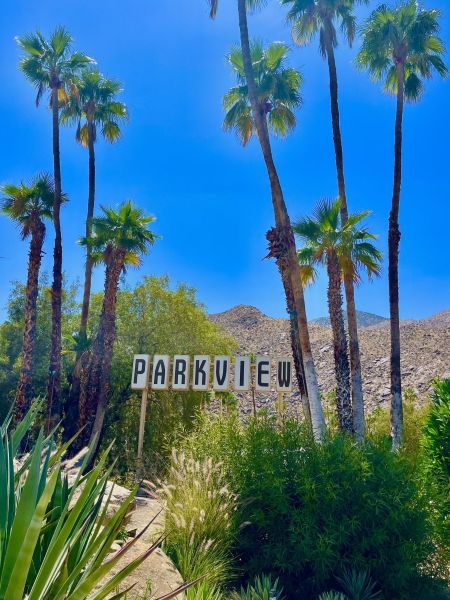
Other parks include Parkview (Existing), Safari (Existing), Palm Canyon Mobile Club (Existing) Blue Skies - Rancho Mirage (Existing)— Horizon Mobile Village (Threatened), Tramview Mobile Home Park (Existing), El Dorado Mobile Homes (Existing), Palm Springs View Estates (Existing)Unfortunately, many others have been demolished, including: Desert Trailer Village, Taylor Trailer Village, Smoke Tree Trailer Park, Palm Springs Trailer Corral, Palm Springs Trailer Village—have largely vanished, replaced by hotels, condominiums, or commercial development.
Ramon Trailer Park: A Planning Blueprint
Ramon Trailer Park stands as a landmark in both Palm Springs history and California planning history.
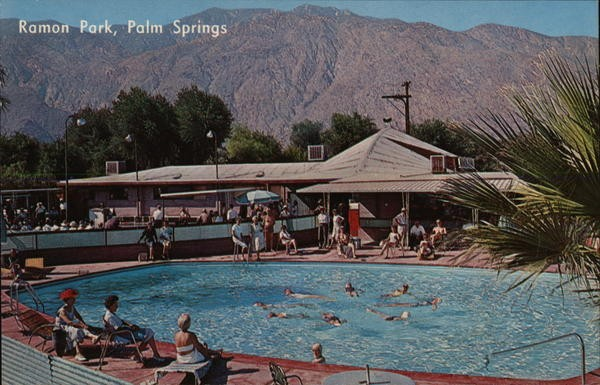
Developed in the early 1930s by John Williams, Ramon was so thoughtfully designed that the State of California used its master plan as the basis for future guidelines on mobile home park development. Decades before the term "intentional community" became popular, John Williams carefully considered landscaping, circulation, spacing, and communal amenities.
Today, Ramon Mobile Home Park & RV still thrives, with over 250 homes on approximately 20 acres, underscoring the durability of excellent planning.
Horizon Village and the The WWII “Common Buildings” Connection
Horizon Mobile Home Village in Palm Springs, established in 1958, began as a simple travel trailer park in the desert carved out of sandy land during the postwar mobile-living boom, located at the base of Ridgecrest, where the infamous Bob Hope house by John Lautner was built. Originally owned by George Nies, the park quickly distinguished itself by adding Palm Springs’ first trailer park swimming pool, cementing its role as an early hub for snowbirds and long-term residents seeking affordable, no-frills desert living with a social twist. Its community-oriented layout and shared spaces reflect a period when mobile home parks functioned as social villages, not just places to stay.
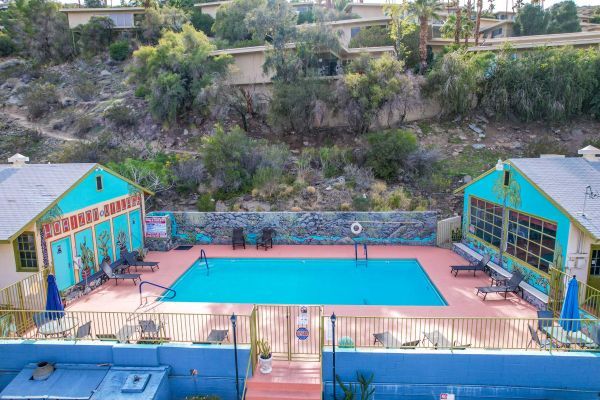
What makes Horizon especially unique is its preservation of that era’s spirit. One of the most interesting threads in Horizon Mobile Home Park's story is the park’s long-associated connection to World War II-era structures — the kind of practical, quickly-built “common buildings” that were used for wartime needs (temporary facilities, recreation buildings, utility structures) and later repurposed when the war ended. . Horizon’s common buildings are said to have once been used by General Patton’s WWII desert training operations, tying the park to the broader wartime and postwar transformation of the Coachella Valley. This kind of reuse was extremely common nationally: WWII accelerated the production and popularity of trailers and temporary housing solutions, which then rolled straight into postwar civilian life.
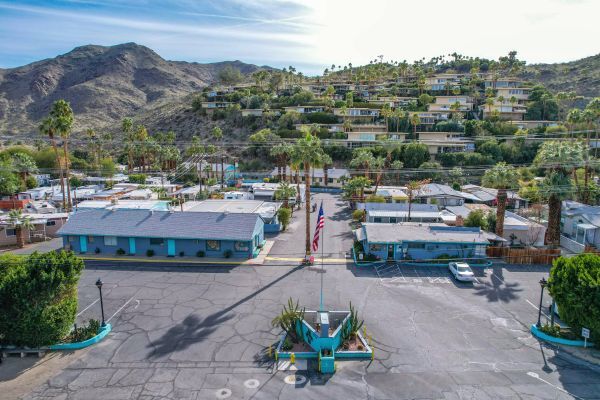
In Horizon’s case, longtime residents have often pointed to the park’s shared spaces as part of that “repurposed” tradition — a very Palm Springs way of doing things: reuse what exists, make it social, make it fun, and let the architecture of everyday life tell the story. Although this park is still in existance, it is threatened as the land lease only has a few years left on it. It's future in uncertain unfortunately.
(If you have original photos, permits, or firsthand accounts of Horizon’s early common buildings, this is exactly the kind of Lost Palm Springs–style documentation worth preserving.)
National Recognition: Sahara Park and National Geographic
Palm Springs’ leadership in mobile living reached a national audience in 1958, when National Geographic featured Sahara Trailer Park.
The article highlighted how trailers were increasingly treated as permanent residences, surrounded by landscaped yards, cabanas, and room additions. Though the original feature is not widely digitized, its existence is confirmed through The Desert Sun and Palm Springs historic context documentation.
That National Geographic chose a Palm Springs trailer park speaks volumes: this was not fringe housing—it was a model for modern living.
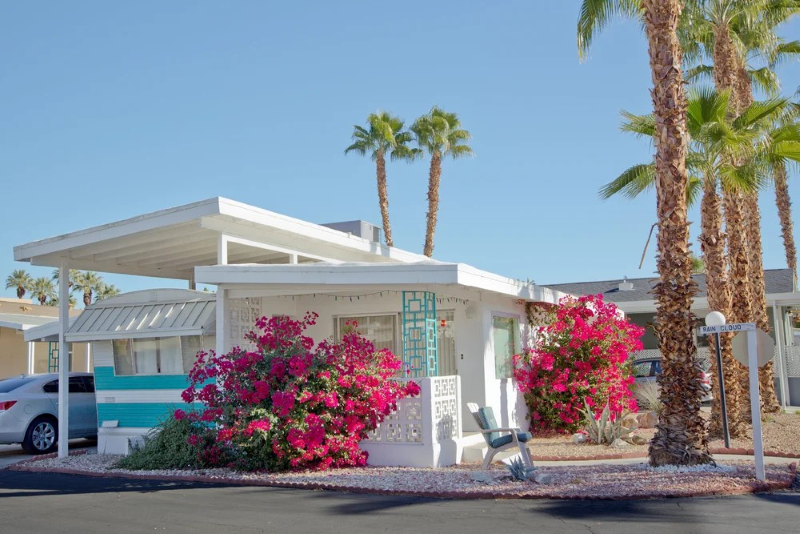
A photo of a mobile home with a ramada and addition, showcased by photographer, Nancy Baron, Beautiful Trailer Town.
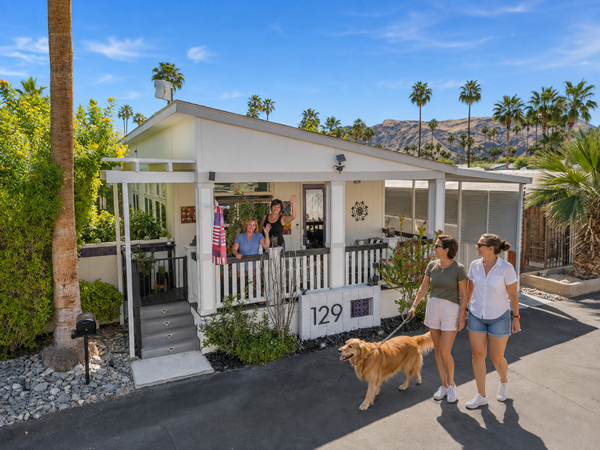
Sahara Mobile Home Park offers one of the most authentic glimpses into what many of Palm Springs’ now-demolished trailer parks once looked like. Personally, I think Sahara most closely resembles those early communities. Here, you’ll still find vintage trailers with room additions and wood ramadas built directly over the homes, creating deep shade from the desert sun. The park's mature landscaping, layered outdoor spaces, and individualized homes create an experience that transports you back in time. For anyone trying to visualize Palm Springs’ midcentury mobile living, Sahara provides an invaluable reference point—and we’re fortunate that it has been so thoughtfully preserved.
Blue Skies Village: Hollywood Glamour Meets Mobile Living
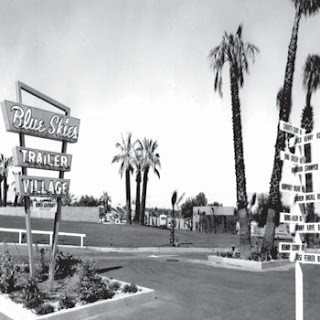
As detailed in a Palm Springs Life feature, Blue Skies Village began in the early 1950s as an unlikely but inspired project by entertainer Bing Crosby. While co-hosting a radio show with Jack Benny at the El Mirador Hotel in Palm Springs in 1952, Crosby sought a nearby desert retreat where he could relax away from the spotlight—yet still entertain his Hollywood circle. His solution was to purchase land along Highway 111 in Rancho Mirage and develop a luxury trailer park named Blue Skies Village, after one of his most famous songs.
From the beginning, Blue Skies was anything but ordinary. Designed as an upscale, planned mobile home community, it attracted celebrity investors including Jack Benny, George Burns, and Barbara Stanwyck, whose names still grace the park’s streets. Crosby himself planted more than 200 palm trees, and at one time city regulations required street trees to be illuminated at night, causing the entire community to glow after sunset.
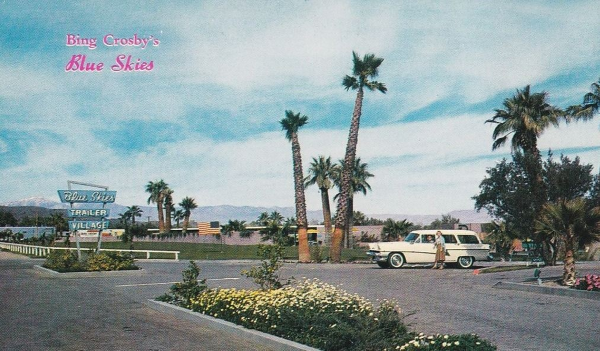
Today, Blue Skies Village operates as a senior living mobile home community, where restored midcentury elements coexist with newer dwellings. Homes range from modest trailers to highly personalized residences, including themed structures like the Egyptian Tomb (complete with a gas fireplace and waterfall), a Japanese-style minka, and expansive homes with guest or maid’s quarters. Golf carts outnumber cars, reinforcing the relaxed, resort-like atmosphere Crosby envisioned.
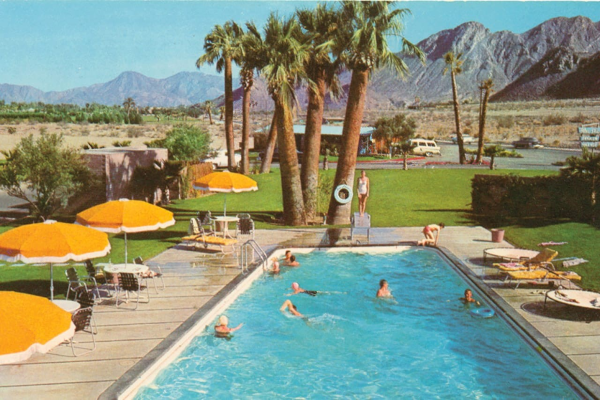
Social life remains central to the community, much as it was during Crosby’s era. Residents continue traditions such as shuffleboard tournaments, variety shows, and potluck suppers, often gathering in the William Cody–designed clubhouse, a significant architectural anchor for the park. Crosby’s legendary parties—frequently Western or luau themed—set the tone for a culture of camaraderie that persists today.
One whimsical relic remains: a lone parking meter, reportedly installed by Crosby’s friends as a joke aimed at Jack Benny, who was famous for his frugality. They dropped nickels into the meter each time they passed, “funding” Benny’s retirement. It remains the only parking meter in Rancho Mirage, a small but telling reminder of the humor and personality woven into the park’s history.
Rancho Trailer Park (South Palm Canyon)
The Lost Mobile Home Community, Beneath Plaza Del Sol
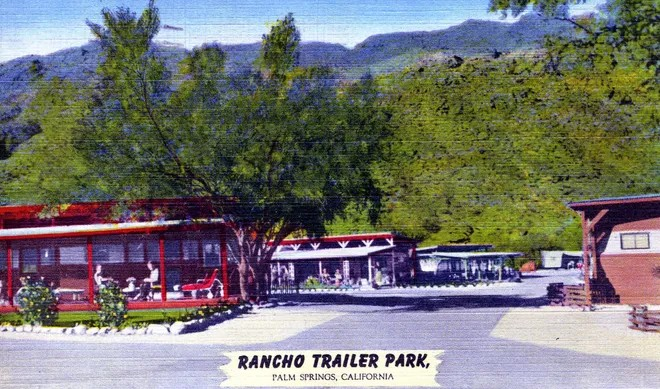
The Rancho Trailer Park once occupied the site along South Palm Canyon Drive where the Plaza Del Sol shopping center—including the former Stein Mart—now stands. Now the location of Market Market and Bar Cecil.
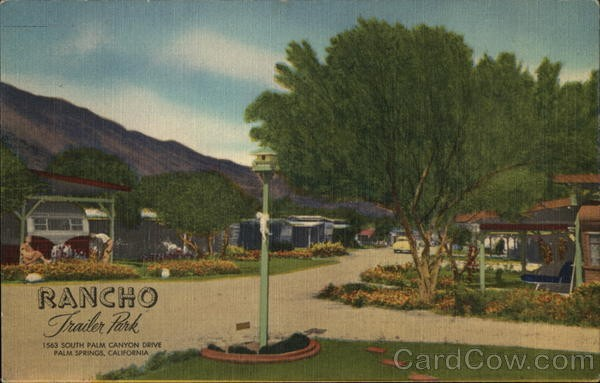
📍 Location: Rancho Trailer ParkFormerly located at or near:1555–1563 S. Palm Canyon Drive, Palm Springs
This places it squarely in South Palm Springs, a corridor that—during the 1940s and 1950s—was lined with auto courts, trailer parks, and early resort-style accommodations catering to seasonal visitors.
🏜 Rancho Trailer Park in Context
Rancho Trailer Park was part of Palm Springs’ first wave of planned mobile living, operating during the period when trailers were evolving from short-term travel units into semi-permanent seasonal residences.
Like other notable parks of the era, Rancho Trailer Park:
- Served winter visitors and snowbirds
- Functioned as a community, not a campground
- Was located strategically along Palm Canyon Drive for visibility and access
- Reflected Palm Springs’ early acceptance of mobile living as a legitimate housing form
Period photographs from around 1950 show Rancho Trailer Park as a tidy, organized community—very much in keeping with Palm Springs’ image as a polished desert resort rather than a rough roadside stop.
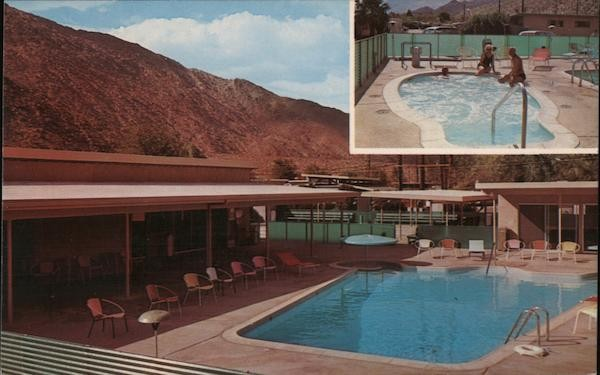
🧠 Why Rancho Trailer Park Matters
Rancho Trailer Park is a textbook example of what Lost Palm Springs seeks to document:
- A well-used, socially important community that disappeared without a trace
- A reminder that Palm Springs’ modernist story includes everyday living, not just iconic houses
- Proof that mobile home parks were once considered compatible with Palm Springs’ most prominent corridors
Standing today in the Plaza Del Sol parking lot, it’s hard to imagine shuffleboard courts, patios, and winter residents gathering there—but that’s exactly what once animated the site.
A Personal Note
As a kid, I remember staying at a hotel next to the Rancho Trailer Park along South Palm Canyon Drive. What fascinated me wasn’t the hotel—it was the park. The rambling lanes filled with trailer homes tucked beneath ramadas built over them, creating shade and protection from the desert sun, captivated me. The yards were neatly framed with white picket fences, punctuated by palm trees and overgrown red bougainvillea spilling over fences and ramadas alike. It felt like a world unto itself—intimate, colorful, and deeply human. Looking back, I realize this may have been the moment that sparked my lifelong appreciation for mobile homes and thoughtfully designed small-scale living, a passion that continues to shape how I see Palm Springs and its architectural history today.
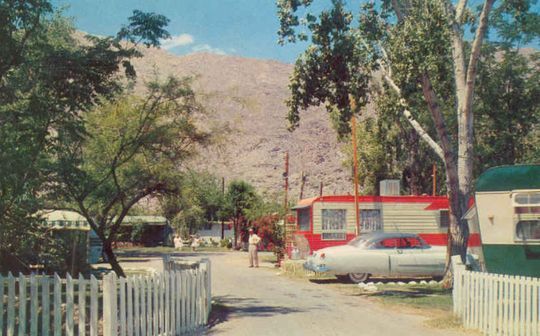
🏗 From Mobile Living to Commercial Development
As Palm Springs grew and land values along Palm Canyon Drive increased, smaller trailer parks in central and south Palm Springs became prime redevelopment targets.
By the 1960s–1970s:
- Trailer parks like Rancho were increasingly viewed as “underutilized” land
- Commercial retail development followed the city’s shift toward year-round economic growth
- Rancho Trailer Park was eventually removed, clearing the site for what became Plaza Del Sol, later anchored by retailers including Stein Mart
This pattern mirrors what happened citywide:Mobile home parks that once defined Palm Springs’ winter culture were replaced by shopping centers, hotels, and condominiums as the city transitioned from seasonal resort town to full-service city.
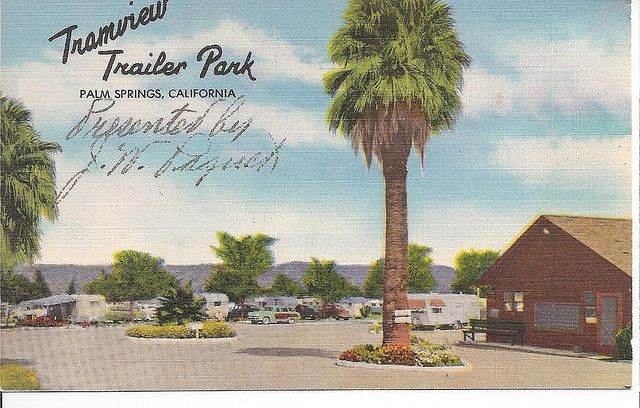
🔄 Tying It Back to Modernism & Tiny Homes
Rancho Trailer Park reinforces a larger truth: Palm Springs’ embrace of compact, community-oriented living long predates today’s tiny home movement.
What we now call “innovative” housing—small footprints, shared amenities, lifestyle-first design—was already thriving here more than 70 years ago.
Projects like the Palm Canyon Mobile Club renovation demonstrate that this lineage never truly disappeared; it simply evolved.
From Trailer Parks to Tiny Homes: A Straight Line, Not a Leap
Today’s tiny home movement is often framed as revolutionary. In reality, Palm Springs has been living this story for nearly a century.
Efficient footprints.Built-in design.Shared amenities.Strong community bonds.
These were hallmarks of Palm Springs’ mobile home parks long before the term “tiny home” existed.
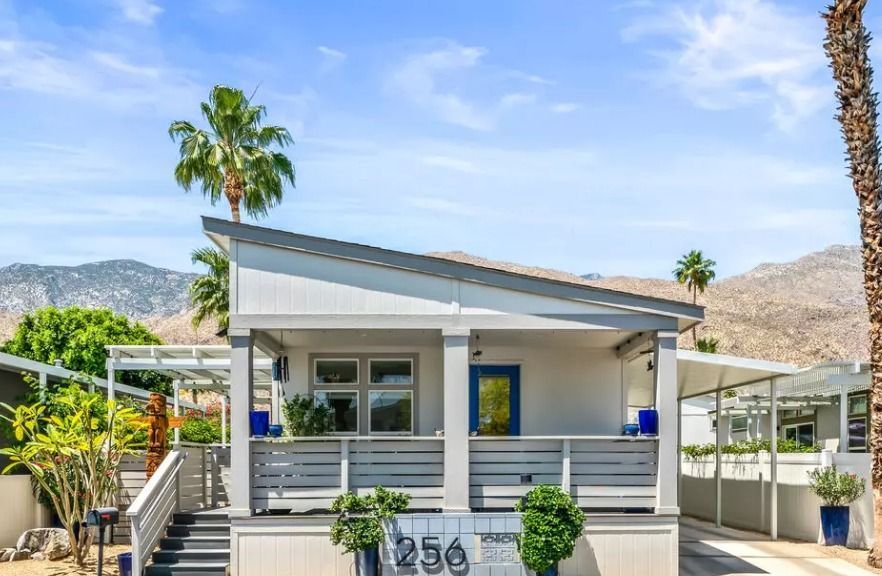
A contemporary example of this continuity is the Palm Canyon Mobile Club renovation (circa 2018) which The Paul Kaplan Group participated in the development, home design and sales. By blending restored midcentury mobile home culture with newly built modern tiny homes, the project demonstrated that the two concepts are not in conflict but are natural extensions of one another.
Rather than erasing the past, the renovation reaffirmed it.
Why This Story Belongs in Modernism Week—and Lost Palm Springs
Mobile home parks were not a footnote to Palm Springs’ modernist era. They were part of its experimental edge, where affordability, design, and lifestyle intersected.
As Modernism Week continues to broaden the narrative far beyond iconic single-family homes, it’s time these communities—and especially their clubhouses—receive the recognition they deserve. They have recognized Vintage Trailers during Modernism Week for years; however, I personally hope someday there will be a tour of these vintage communities to showcase them to other mid-century design aficionados.
These mobile home parks and homes remind us that modernism in Palm Springs was never only about iconic glass houses or architecture reserved for the wealthy and well-connected. It was also about new ways of living—practical, social, and attainable. Mobile home communities offered people of more modest means the same essential promise of the desert: sunshine, escape, and a sense of belonging. They allowed everyday Americans—not just Hollywood elites—to carve out a place in Palm Springs and participate in its modern lifestyle.
Today, these homes are experiencing a renewed appreciation. Many have been thoughtfully restored and renovated for 21st-century living while preserving their vintage charm, craftsmanship, and sense of community. In doing so, they carry forward a tradition of intentional, design-forward living that has long been part of the desert’s DNA.
And that, very much, is a Lost Palm Springs story.
Sources & Further Reading
- The Desert Sun — “Palm Springs was the ‘Jeweled Showcase of Mobile Living’ in the ’50s and ’60s,” by Renee Brown (2018)
- Palm Springs Life — Feature article on Blue Skies Village, Bing Crosby, and the history of the Rancho Mirage mobile home community, detailing its Hollywood origins, architectural significance, and continued social traditions. Palm Springs Life — Features on midcentury mobile home parks and desert modern living
- Palm Springs Citywide Historic Context Statements
- Cardcow.com - the source for many vintage Palm Springs postcards.
- National Geographic (1958) — Feature on Sahara Trailer Park (as cited in local historic documentation)
Lost Palm Springs is an ongoing series from The Paul Kaplan Group, dedicated to exploring the buildings, places, and everyday spaces that once shaped life in the desert—and the stories they continue to tell. Through architecture, art, photography, and personal memory, we document what has been lost, what survives in fragments, and what still quietly influences Palm Springs today.
Some of the history shared here comes from archival research, while other details are drawn from oral histories and lived experience. As with any evolving historical record, there may be omissions or inaccuracies. We welcome reader contributions, photographs, firsthand recollections, and corrections, and we view these posts as living documents—updated as new information comes to light.
We firmly believe that understanding Palm Springs' past, not just the architecture but the lifestyle too, helps us better appreciate what remains and recognize what is worth protecting for the future.
Selling Your Home?
Get your home's value - our custom reports include accurate and up to date information.