For Californians priced out of coastal cities, searching for homes for sale in Palm Springs California offers a strategic "Desert Dream" entry into homeownership. In 2026, the market has balanced, providing first-time buyers with improved inventory and increased negotiating power. While luxury prices have risen, the region remains one of the last areas in Southern California where entry-level ownership is mathematically possible for those willing to start with a condo or a fixer-upper.
The door is open for buyers who can navigate unique desert factors like seasonal utility spikes and Indian Lease Land. Current homes for sale in Palm Springs California range from median condo prices of $395,000–$450,000 to entry-level single-family residences between $630,000–$645,000. By targeting value-driven neighborhoods like Demuth Park or utilizing Riverside County’s down payment assistance, first-time buyers can secure a high-quality lifestyle at a fraction of the cost found in Los Angeles or San Diego.
Pros and Cons of Buying Your First Home in Palm Springs
Before we dive into the financials, it’s important to look at the lifestyle reality. Living in the desert is fantastic, but it is different from the coast. Below are some pros and cons of living in Palm Springs:
The Upside: Access and Lifestyle
The biggest draw is the lower barrier to entry. Your down payment goes significantly further here than it does two hours west. Beyond the money, the lifestyle is slower and more recreational. You have access to incredible hiking, a vibrant pool culture, and a community that feels like a small town despite being an international destination. Plus, as the Coachella Valley continues to grow, buying now helps you lock in value before future appreciation kicks in.
The Downside: Heat and Complexity
There are trade-offs. The most obvious is the "Summer Tax"—electricity bills in July, August, and September can be shocking; often at $300 to $600+ per month; just to keep the house at 78 degrees. You also have to deal with the unique learning curve of "Lease Land," which scares off many uneducated buyers. Finally, keep in mind that this is still a seasonal economy. While it’s becoming a year-round city, some favorite restaurants and shops still reduce hours or close entirely during the hottest weeks of summer.
Embracing the Palm Springs Lifestyle: More Than Just a Home
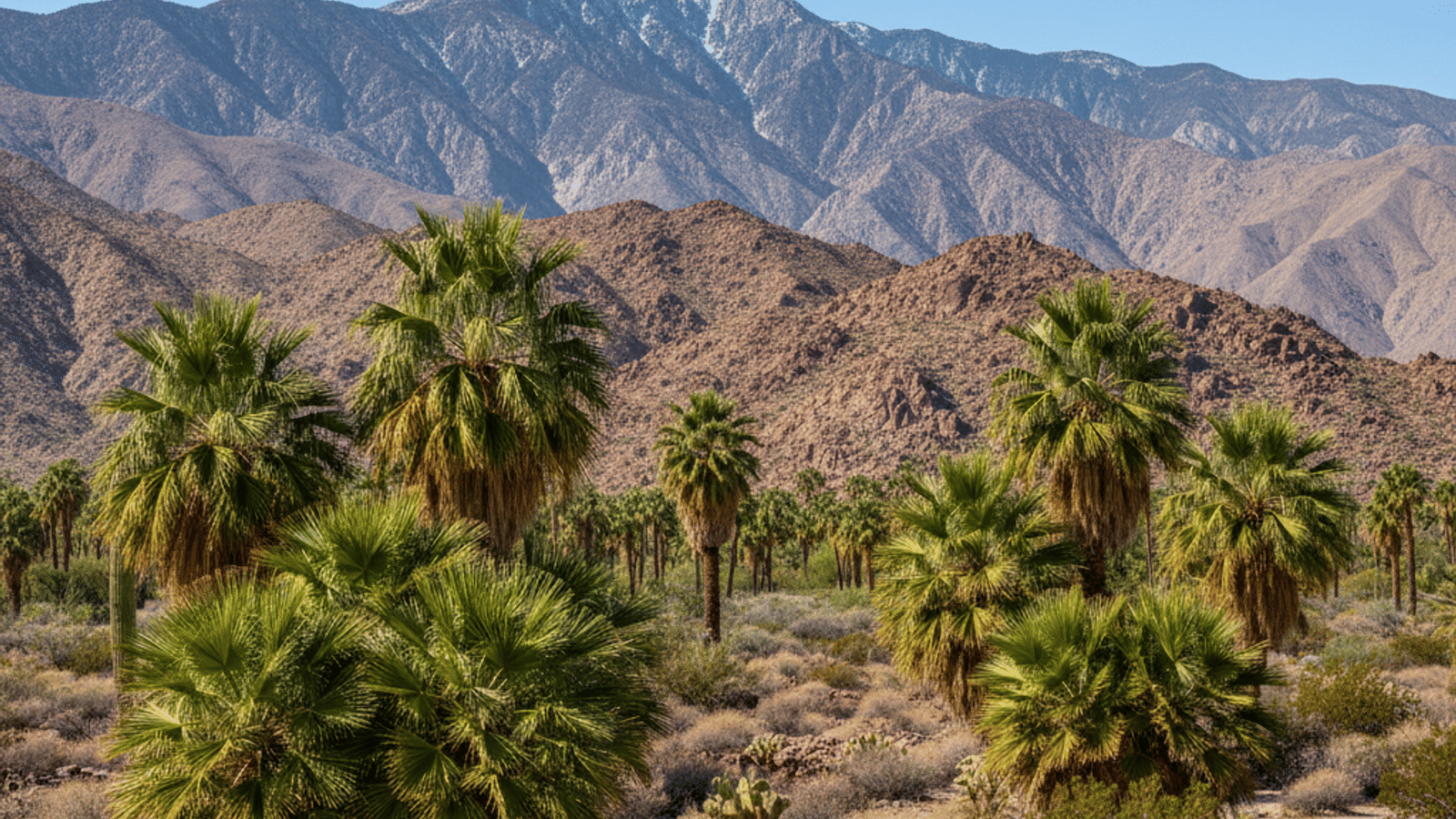
If you are looking to buy a new home, living in Palm Springs offers a unique blend of luxury and an active lifestyle defined by modern architecture, 300 days of sunshine, and a vibrant and welcoming social scene. From world-class events like the Palm Springs International Film Festival to the rugged beauty of Joshua Tree National Park, the city is a lush oasis for those seeking a strong sense of community.
The Palm Springs real estate market continues to attract buyers moving to the Coachella Valley with a diverse range of housing options across every price range, including nearby Rancho Mirage and Palm Desert. As the area evolves into a year-round destination supported by working from home trends, owning a home here has never been more practical. To navigate current housing market trends and find your perfect house in Palm Springs, consult a local real estate agent to start your move to Palm Springs.
The Elephant in the Room: Understanding Lease Land
If you are browsing listings and see a beautiful home priced 20% lower than everything else, you have likely stumbled upon "Lease Land." This unique arrangement stems from historic land grants to the Agua Caliente Band of Cahuilla Indians, resulting in a "checkerboard" map where ownership is split between Fee Simple, which is owning the land, and Indian Lease Land, which is owning the home while renting the dirt. For first-time buyers, lease land offers a major advantage by reducing the upfront purchase price by 15% to 20%, making it far easier to secure a down payment and enter the market.
However, this affordability comes with specific trade-offs that require careful financial planning. The fact that your loan balance will decrease comes with an expense in terms of a lease price that usually costs between $200 and $600 per month, which will also be considered in your Debt-to-Investment ratio by lenders. To secure a 30-year loan, you’ll need to work with a local lender who understands that the lease must run for at least five years beyond the end of the loan term. Consequently, purchasing land under a lease can serve as an ingenious tactic for “buying the structure, and not the dirt,” as long as you work with a team that assists you in dealing with the lease term process.
Calculating the True Cost of Ownership
When transitioning from renting to owning, the sticker price of homes for sale in Palm Springs California is just the beginning. Your monthly budget must account for specialized desert costs, particularly the significant HOA fees common in local condos and planned developments. These fees usually range from $400 to $600 and cover essential amenities like pool maintenance, landscaping, and roof repairs, so it is vital to verify exactly what is included to avoid over-budgeting.
Beyond association fees, you should prepare for property taxes and insurance. Riverside County property taxes typically hover between 1.1% and 1.25% of the purchase price. While the desert is generally safer from wildfires than California’s wooded foothills, insurance rates across the state remain volatile, making it important to confirm coverage costs for your specific property early in the process.
The most unusual financial consideration when living in the desert is what is referred to as the “Summer Tax” due to utility rate increases. While a fixed price is to be expected when living near the ocean, where there is a constant air temperature, the cost of electricity to heat a home in Palm Springs might be $100 in spring and increase to more than $500 in August because of air conditioning.
Best Neighborhoods for First-Time Buyers
When looking for homes for sale in Palm Springs California, your best options depend on whether you prefer a low-maintenance condo or a standalone starter house with a yard. It is important to have a look at and see what the best neighborhoods in Palm Springs CA are:
Entry-Level Condo Communities
Condos represent the most accessible entry point into the market, allowing buyers to build equity in prime locations while keeping monthly mortgage payments manageable through shared maintenance costs.
- Palm Springs Villas II: A top-tier value area where units can still be found under $300,000.
- Riviera Gardens & Biarritz: These offer a "sweet spot" between $395,000 and $450,000, blending prime location with affordability.
Starter Single-Family Neighborhoods
These areas are known for their solid "bones" and suburban feel, offering first-time buyers the chance to own the land and invest in a detached home at a fraction of the price of the luxury enclaves.
- Demuth Park: Known for smaller mid-century homes and proximity to pickleball courts and the airport at a lower price point.
- Desert Park Estates: It is a popular north-side community that has bigger lots and "Fee Land," making financing a lot easier.
- Cathedral City: A popular alternative when Palm Springs prices push the edge of your budget. It’s close by, still offers mountain views, and home prices are often noticeably lower.
Financing & First-Time Buyer Programs
- Finding upscale Palm Springs homes that feel within reach can be challenging, especially if you’re navigating financing on your own. Many buyers find themselves stuck between renting and buying, unsure of what support is actually available. The good news is that several well-established programs can help bridge that gap.
- Riverside County First-Time Home Buyer Program Qualified low- to moderate-income buyers may receive down payment assistance of up to 20% of the purchase price, capped at $100,000.
- CalHFA State Programs State-backed options such as the Dream For All shared appreciation loan are expected to reopen for new applications in early 2026. These programs are designed to help buyers cover a significant portion of their down payment.
- Mortgage Credit Certificate (MCC) This federal program allows homeowners to convert a portion of their annual mortgage interest into a dollar-for-dollar tax credit, which can improve qualifying income.
- FHA and VA Loans Government-backed loans offer lower down payment requirements, 3.5% for FHA loans and no down payment for VA loans. Condo purchases must be in HUD-approved complexes.
- Neighbourhood-Specific GrantsSome areas, including Cathedral City and parts of Riverside County, offer grant programs for first-time buyers. Funding is limited and usually awarded on a first-come, first-served basis, so timing matters.
Smart Buying Tips for the Desert Market
Buying in Palm Springs involves more than choosing a home you like. The climate, neighbourhood dynamics, and local rules all play a role. Keeping these factors in mind can help you make a better long-term decision:
- Experience the Summer Heat: It may seem unusual, but spending time in the area during July or August gives you a realistic sense of what daily life feels like in peak summer conditions.
- Verify Rental Restrictions: While many buyers hope to offset their mortgage with Airbnb, homes for sale in Palm Springs California are subject to strict rental regulations, including a 20% density cap on permits per neighborhood. Most permits are limited to 26 rental contracts per year, and neighborhoods at capacity often have long waitlists. If a full permit is unavailable, a "Junior Vacation Rental" certificate allows for six stays annually and is typically exempt from caps, provided the owner remains on-site.
- Hire a Local Expert: Avoid using an out-of-town agent. You need a specialist who understands the "checkerboard" of Indian Lease Land, can evaluate the financial health of specific HOAs, and knows how to write contracts that protect your interests during the lease review period.
Is Palm Springs Right for You?
Palm Springs offers a unique entry point into California homeownership, specifically via the condo market. It is one of the few places left where a normal income can buy a stylish, comfortable life.
If you can tolerate the summer heat and navigate the math of lease land, you get a premium lifestyle for a fraction of coastal prices. The key is to look past the sticker price and calculate your total monthly output—mortgage, HOA, lease, and utilities. If those numbers work, the desert is waiting.
FAQs
What is a first-time buyer looking for when considering a condo versus a house in the Palm Springs area?
For the average first-time buyer, buying or renting a condo makes sense as the entry point. Compared to entry-level homes that start at over $630,000, good condos can be had for around $450,000, and as an additional expense, HOA fees will be higher.
Are home prices falling in Palm Springs?
At present, as of 2026, the prices are stabilized and are no longer crashing. This market has reached a "balanced" point, which indicates that the prices are steady but the customers are also getting more time to check the products before buying them compared to the past years when the market was at its peak.
What is the 4th District First Time Home Buyer Program?
This program has no income restrictions, This is a specific scheme and is targeted towards assisting buyers who belong to the low-to-moderate-income group. The scheme will provide considerable assistance regarding down payments, and, in most cases, the down payment assistance is up to 20% of the purchase amount, assisting buyers who have the ability to pay but do not have the necessary down payment amount.
Is Palm Springs safe?
As a whole, Palm Springs is a safe place to be, although, like other cities, it is not homogeneous in its neighborhoods. Neighborhoods around park areas, like Demuth Park, have a great community atmosphere, but buyers should look at the grade of local schools and explore the neighborhoods during various daylight hours to determine if the atmosphere fits the needs of the family.
What happens when a lease on a piece of property runs out in Palm Springs?
When a land lease reaches its end, ownership of both the land and the home technically returns to the landowner. In practice, though, renewals and renegotiations are usually handled long before that point. The real challenge is financing. If the remaining lease term is under 35 years, most lenders won’t approve a standard 30-year fixed mortgage, which often leaves buyers needing to pay cash or work with a portfolio lender instead.