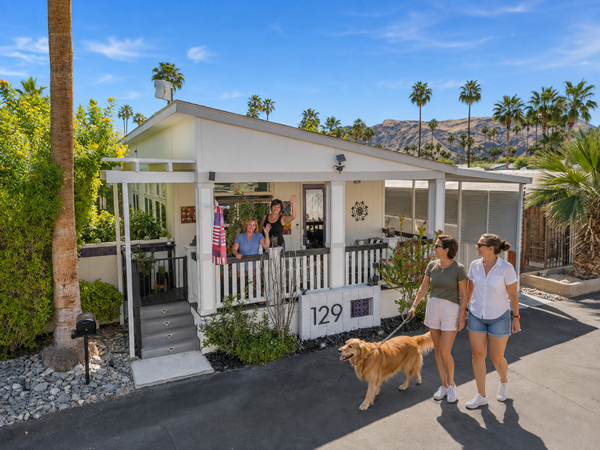

The Coachella Valley desert landscape presents a unique environment for buyers evaluating a relocation. Moving to Palm Springs, CA, means adapting to extreme summer temperatures, specific architectural styles, and an economy driven by seasonal tourism.
Understanding the local realities requires looking past the resort-town reputation. Buyers face a housing market with median detached home prices exceeding $1.1 million, paired with utility costs that spike considerably during the hotter months.
Geography and Climate in the Coachella Valley
The city sits at the western edge of the Coachella Valley, directly south of Interstate 10. Driving from Los Angeles or San Diego takes about two hours under normal traffic conditions, making the area accessible from major Southern California hubs. The San Jacinto Mountains border the city to the west, casting early afternoon shadows that cool the immediate neighborhoods slightly sooner than the rest of the valley.
Weather patterns here are defined by intense desert extremes rather than mild transitions. Residents experience over 300 days of sunshine annually, with winter temperatures averaging in the 70s. Summer months routinely bring temperatures above 110 degrees, accompanied by seasonal wind events that blow fine desert dust through the valley.
For longer travel, Palm Springs International Airport operates just minutes from the downtown center. The facility offers direct flights to major hubs across the United States and Canada, though some airlines scale back their flight frequencies during the slower summer season.
Housing Market Prices and Property Types
The median price for a detached single-family home in Palm Springs sits around $1,127,000 as of early 2026. Buyers looking for attached condominiums will find a median price closer to $437,000. For those choosing to lease before buying, a standard one-bedroom apartment near the city center rents for approximately $1,850 per month.
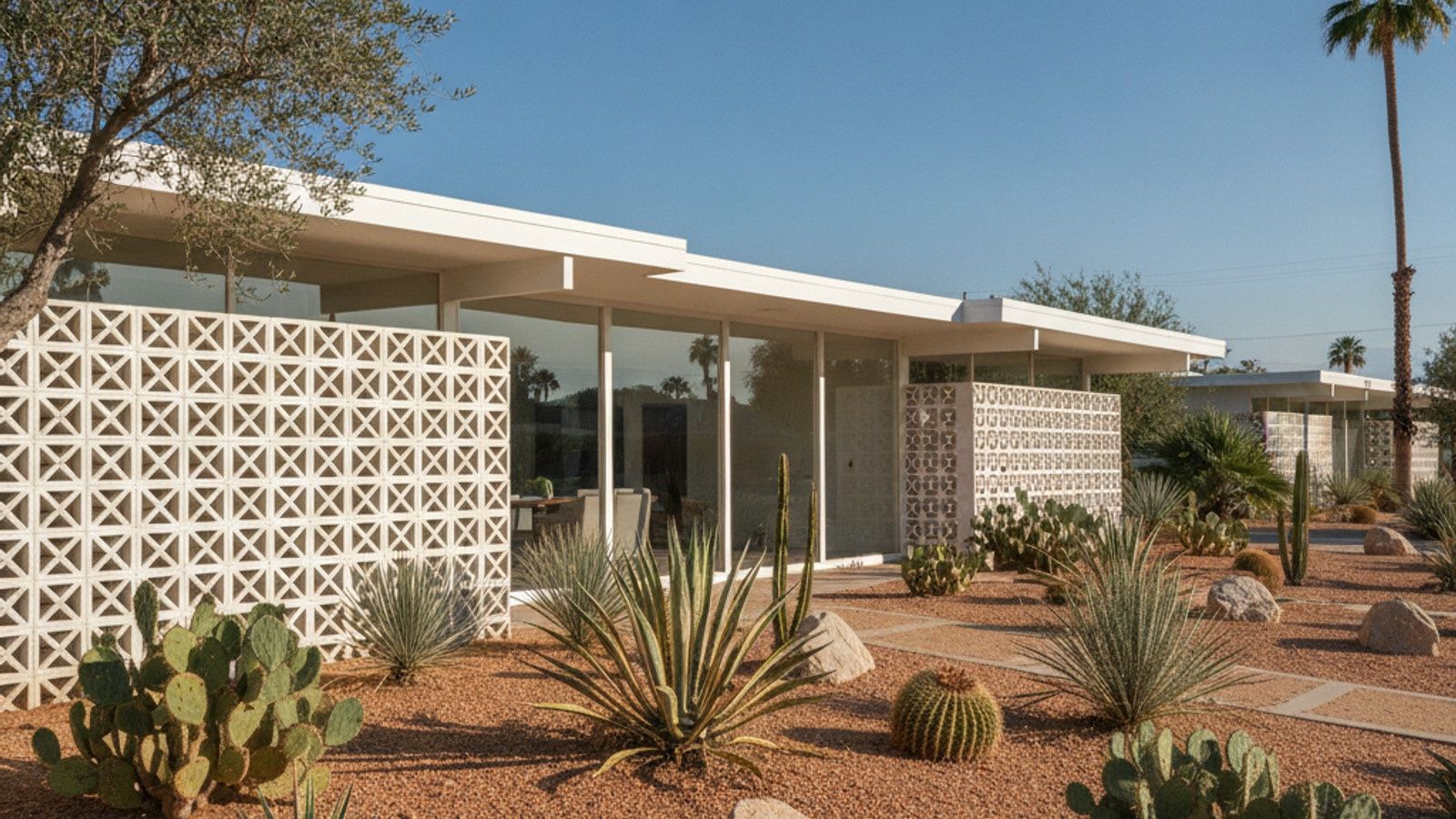
The local architectural landscape is dominated by mid-century modern design. Homes frequently feature flat rooflines, breeze-block walls, and large glass panels that integrate indoor and outdoor spaces. Many of these properties sit on leased land owned by the Agua Caliente Band of Cahuilla Indians, which requires buyers to pay monthly land lease fees in addition to their mortgage.
Ownership costs extend beyond the purchase price and land leases. Buyers should factor in monthly homeowners association fees, which are common in both condo complexes and gated single-family neighborhoods. The city also levies a property transfer tax at closing, which adds to the initial out-of-pocket expenses for buyers.
Cost of Living and Commute Times
The overall cost of living in Palm Springs runs about 23 percent higher than the national average. Housing costs drive the majority of this difference, but everyday expenses like groceries and dining also reflect the premium of a resort destination.
Utility expenses require careful budgeting, especially from June through September. Sustained summer heat forces air conditioning units to run continuously, leading to electric bills that routinely exceed averages seen in coastal California cities. Buyers should ask sellers for a 12-month utility history during the inspection period to understand the property's specific energy usage.
Commuting within the Coachella Valley is generally straightforward via Highway 111 or Interstate 10. Driving to neighboring cities like Cathedral City or Palm Desert takes 15 to 25 minutes. Traffic congestion remains relatively light compared to coastal metropolitan areas, though travel times increase during major spring music festivals and the peak winter tourist season.
Local Schools and Medical Facilities
The Palm Springs Unified School District serves approximately 20,000 students across the western Coachella Valley. The district operates 28 distinct campuses, including elementary, middle, and high schools. Public school boundaries cover Palm Springs as well as portions of Cathedral City, Desert Hot Springs, and Rancho Mirage.
Desert Regional Medical Center serves as the primary hospital for the immediate area. The facility operates as the only Level I Trauma Center in the Coachella Valley, handling emergency and critical care for the broader desert region.
The medical center expanded its specialized care footprint in early 2026 with the opening of the Desert Regional Cardiology Center. This addition consolidated general cardiology, stress testing, and advanced diagnostic services into a single location. The hospital campus also houses a comprehensive stroke center and a dedicated neonatal intensive care unit.
Parks, Golf Courses, and Outdoor Recreation
The Coachella Valley features more than 100 golf courses, with several public and private options located directly within Palm Springs. Municipal parks provide tennis courts, pickleball facilities, and shaded picnic areas that remain active during the cooler morning hours.
Access to open desert terrain allows residents to utilize an extensive network of hiking and equestrian trails. Elevation changes dictate the hiking season, with valley-floor trails seeing the most use between October and April.
Local outdoor locations offer distinct environments for daily recreation:
- Tahquitz Canyon: Located near downtown, this two-mile loop trail features a 60-foot seasonal waterfall and requires an admission fee to enter the tribal land.
- Palm Springs Aerial Tramway: The tram transports visitors from the desert floor to the San Jacinto peak, where temperatures are often 30 degrees cooler.
- Joshua Tree National Park: Situated about an hour northeast of the city, the park provides access to massive boulder formations and high-desert ecosystems.
Frequently Asked Questions
What is the Palm Springs 2-hour rule?
The term historically refers to mid-century Hollywood studio contracts that required actors to remain within a two-hour drive of Los Angeles. This geographical requirement helped establish Palm Springs as a celebrity destination. Today, locals use the phrase to describe the logistical reality that the city remains an easy two-hour drive from both the Los Angeles and San Diego metropolitan areas.
Is Palm Springs a good place to live year-round?
Full-time residency requires adapting to four months of extreme summer heat, which alters daily routines and increases utility costs. However, year-round residents benefit from quieter neighborhoods, easier restaurant access, and lower traffic from June through September. Buyers should weigh their tolerance for sustained 110-degree weather before committing to a primary residence.
Does Palm Springs get extremely windy?
The city experiences significant wind events, particularly during the spring and early summer months. The San Gorgonio Pass funnels coastal air into the desert, creating gusts that blow sand and dust across roads and into residential pools. Buyers should evaluate a property's orientation and existing windbreaks when touring homes.
Selling Your Home?
Get your home's value - our custom reports include accurate and up to date information.