The Coachella Valley offers a distinct blend of natural beauty and resort-style infrastructure that draws buyers from across the country. Relocating to this part of Southern California requires understanding both the financial realities and the unique environmental factors of desert living. Buyers entering the market today must evaluate everything from seasonal utility expenses to the nuances of local property taxes.
Anyone researching moving to Palm Desert, CA will quickly find that the city operates as the retail and geographical center of the region. Navigating this market in 2026 means balancing association fees, evaluating specific community amenities, and preparing for the logistics of year-round property maintenance. The area provides a highly structured living environment that appeals to a wide range of property owners.
Choosing the right property here involves looking beyond the standard listing photos to understand the daily realities of the neighborhood. Evaluating proximity to major transit corridors, access to specialized healthcare, and the design of local utility grids will directly impact long-term satisfaction.
What to Know Before Moving to Palm Desert, CA
Palm Desert stands out as a premier destination within Southern California for buyers seeking reliable year-round sunshine and immediate access to outdoor recreation. The city boasts over 300 days of sunshine annually, creating an environment built around golf courses, tennis facilities, and extensive hiking trails. This consistent climate allows residents to maintain an active outdoor lifestyle throughout the majority of the calendar year.
This favorable weather drives a strong seasonal housing market, with many part-time residents arriving during the winter months. A growing number of buyers are now choosing to make the city their primary residence to take advantage of the expanded retail and dining options. The shift toward year-round residency has prompted significant investments in local infrastructure and commercial developments.
The local recreation scene extends far beyond traditional golf courses to include massive pickleball complexes and dedicated cycling lanes. Municipal investments in public parks and trail maintenance ensure that residents have continuous access to well-kept outdoor facilities. These amenities are deliberately integrated into the residential landscape, making recreation highly accessible from almost any subdivision.
Palm Desert balances luxury amenities with everyday accessibility far better than neighboring Palm Springs. Buyers here typically find a more practical mix of big-box retail, specialized medical facilities, and varied housing styles without sacrificing the resort atmosphere. The city offers a highly functional layout that prioritizes daily convenience alongside upscale entertainment.
Palm Desert Real Estate Market Trends and Average Home Prices
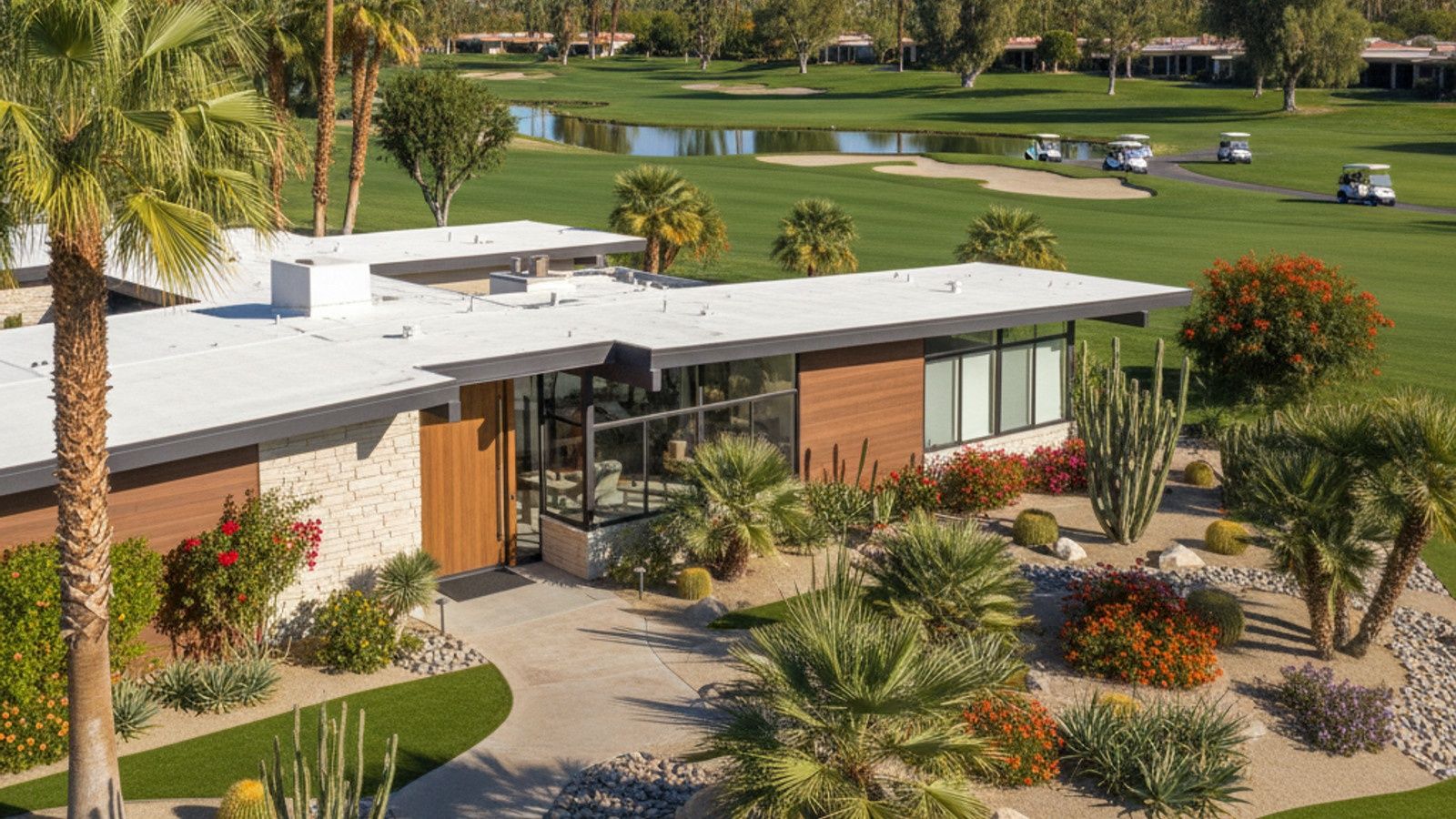
The current housing market offers distinct property types ranging from mid-century modern estates to newer construction within expansive master-planned developments. As of early 2026, the median home price for detached single-family properties sits in the mid-to-high $500,000s. Inventory levels fluctuate seasonally, requiring buyers to act decisively when highly upgraded properties hit the local Multiple Listing Service.
Buyers looking at attached homes and condominiums can expect average prices hovering around $517,000. Many of these properties are located inside gated communities or directly on golf courses, which heavily influences the overall monthly carrying costs. These attached units often serve as low-maintenance secondary homes or entry points into highly sought-after neighborhoods.
Homeowner association dues are a significant factor in this market, with monthly HOA fees ranging anywhere from $200 to over $1,000. These fees typically cover exterior maintenance, security gates, community pools, and sometimes private fitness centers or golf privileges. Reviewing the association's financial reserves and specific coverage documents is a mandatory step during the escrow process.
Buyers consistently get more square footage and newer construction features here compared to the older inventory found in Palm Springs. Stretching your budget slightly further down the Interstate 10 corridor often yields larger lot sizes and lower price-per-square-foot ratios. The housing stock in this central valley location represents a strategic middle ground for real estate investment.
Property Taxes and Mello-Roos in Riverside County
Understanding local tax structures is a necessary step before finalizing any property purchase in the Coachella Valley. The base property tax rate in Riverside County is roughly 1.25%, but the effective rate varies between 0.77% and 0.86% depending on the specific location and available exemptions. These baseline rates apply to the assessed value of the home at the time of purchase.
Newer developments in Palm Desert frequently carry additional Mello-Roos taxes to fund local infrastructure like roads and utility connections. Buyers must verify the specific zip code and subdivision tax profile with their agent before submitting an offer to avoid unexpected monthly expenses. These supplemental assessments can add hundreds of dollars to a monthly housing payment.
Palm Desert, CA Cost of Living Statistics
Evaluating the financial trade-offs of desert living requires looking beyond the initial purchase price of a home. The overall cost of living in Palm Desert runs approximately 16% to 24% higher than the national average. This premium reflects the high demand for housing in a resort-oriented geographic area with limited buildable land.
This local index actually sits about 10% to 12% lower than the overall California state average, offering a relative value for those relocating from coastal cities. Housing costs drive the bulk of this difference, but daily expenses also play a major role in monthly budgeting. Many buyers relocating from Los Angeles or the Bay Area find their purchasing power increases significantly upon arriving in the desert.
Utility costs require special attention due to the massive demand for air conditioning during the summer heat. Residents typically see significant spikes in their electricity bills from June through September to maintain comfortable indoor temperatures. Budgeting for these seasonal utility fluctuations is a standard part of managing a household in this climate.
Water usage is another crucial utility consideration, especially for properties with extensive landscaping or private swimming pools. Many homeowners associations now mandate drought-tolerant desert landscaping to help mitigate these specific utility costs. Upgrading to energy-efficient appliances and smart irrigation systems can provide noticeable monthly savings.
Grocery and transportation expenses align closely with broader Southern California pricing trends. The distinct financial advantage of moving here lies in the lower housing costs compared to coastal hubs, though buyers must budget carefully for seasonal utility spikes.
Parks, Healthcare, and Recreation Amenities
The city operates as the primary commercial hub for the surrounding desert communities, offering extensive retail and recreational infrastructure. The El Paseo shopping district anchors the local economy with high-end retail stores, art galleries, and diverse dining options. This concentrated commercial zone serves as a major draw for both residents and regional visitors.
Outdoor recreation remains a major focus, anchored by expansive public spaces like Civic Center Park and miles of maintained hiking trails. The Living Desert Zoo and Gardens provides an immersive look at desert flora and fauna while supporting local conservation efforts. These public spaces are meticulously maintained and serve as central gathering points throughout the cooler months.
The local dining scene features a wide array of options ranging from casual outdoor cafes to upscale steakhouses. Many restaurants are clustered near the central shopping districts, providing easy access for evening entertainment. The culinary landscape has expanded rapidly in recent years to accommodate the growing population of full-time residents.
Medical infrastructure is a critical component of the local economy, centered around the highly rated Eisenhower Medical Center. This facility provides comprehensive specialty care, emergency services, and extensive outpatient clinics throughout the area. Having multiple urgent care centers and specialized medical offices nearby provides peace of mind for property owners.
The robust healthcare network adds immense value for local residents by eliminating the need to travel to Los Angeles for specialized treatments. Having world-class medical facilities minutes from residential neighborhoods makes this city a highly practical long-term investment. Access to quality healthcare remains a top priority for buyers evaluating the Coachella Valley.
Education in the Desert Sands Unified School District
Public education in the area falls under the jurisdiction of the Desert Sands Unified School District. As of 2026, this massive district serves over 25,800 students across 35 different school campuses throughout the central valley. The district manages a wide geographical area, meaning school assignments vary significantly based on specific property locations.
The district includes several highly rated local options, with Palm Desert High School frequently recognized for its academic and extracurricular programs. Buyers evaluating different neighborhoods will find that school boundaries can impact property values in specific subdivisions. Reviewing current boundary maps is essential before committing to a specific housing tract.
The district maintains specific transfer policies and an open enrollment process that allows some flexibility for residents. Buyers should review the annual transfer windows and capacity limits if they wish to enroll outside their designated neighborhood boundaries. Navigating these administrative processes requires early planning during the relocation phase.
The accessibility of varied public education options within the city limits provides strong foundational value for the local housing market. Buyers prioritizing proximity to specific campuses should map out exact school zones before focusing on individual listings. Strong local schools consistently support long-term property demand in the surrounding neighborhoods.
Commute Times and Transportation Infrastructure
Navigating the Coachella Valley relies heavily on two primary transportation corridors that run through the center of the region. Interstate 10 serves as the main high-speed artery, while California State Route 111 connects the various desert cities with dedicated retail frontage. Understanding the traffic patterns along these two routes is crucial for daily route planning.
Typical commute times remain highly manageable, with trips to nearby Indio or Cathedral City rarely exceeding 20 minutes outside of major festival weekends. Driving to Los Angeles takes roughly two hours under normal conditions, though Friday afternoon traffic can significantly extend that timeline. The predictability of local traffic makes daily errands highly efficient compared to larger metropolitan areas.
The SunLine Transit Agency provides regional public transportation, operating a modern fleet with a stated goal of achieving zero-emission buses by 2035. Their services include traditional fixed routes along Highway 111 and the on-demand SunRide microtransit program for localized trips. These transit options offer a viable alternative for navigating the central commercial districts.
Regional air travel is facilitated by the nearby Palm Springs International Airport, located just a short drive from the city limits. The airport offers direct flights to major hubs across the country, making travel highly convenient for residents. This proximity to a major transportation hub is a significant selling point for buyers who travel frequently.
Despite these public transit investments, owning a personal vehicle remains the most practical choice for navigating the sprawling desert landscape. A car is essential for reaching specific trailheads, golf courses, and residential areas tucked against the mountains. The infrastructure is fundamentally designed around personal vehicle ownership.
Frequently Asked Questions About Relocating to Palm Desert
How do residents handle the extreme summer heat in Palm Desert?
Residents rely heavily on robust air conditioning systems and structured daily routines to manage summer temperatures. Outdoor activities are typically scheduled for early morning or late evening hours to avoid the peak heat. Upgraded HVAC units and energy-efficient windows are practically mandatory features for homes in this climate.
Is Palm Desert or Palm Springs a better place to live?
Palm Desert offers a more centralized location with extensive retail options and newer housing developments. Palm Springs provides historic mid-century architecture and a denser downtown entertainment district. Buyers looking for lower price-per-square-foot ratios generally find better value in Palm Desert.
What is the property crime rate in Palm Desert?
Property crime rates in the area align closely with the broader Riverside County averages. Many residents utilize the security features provided by local gated communities to protect their properties. Prospective buyers should review the latest municipal data for specific zip codes when evaluating locations.
Selling Your Home?
Get your home's value - our custom reports include accurate and up to date information.