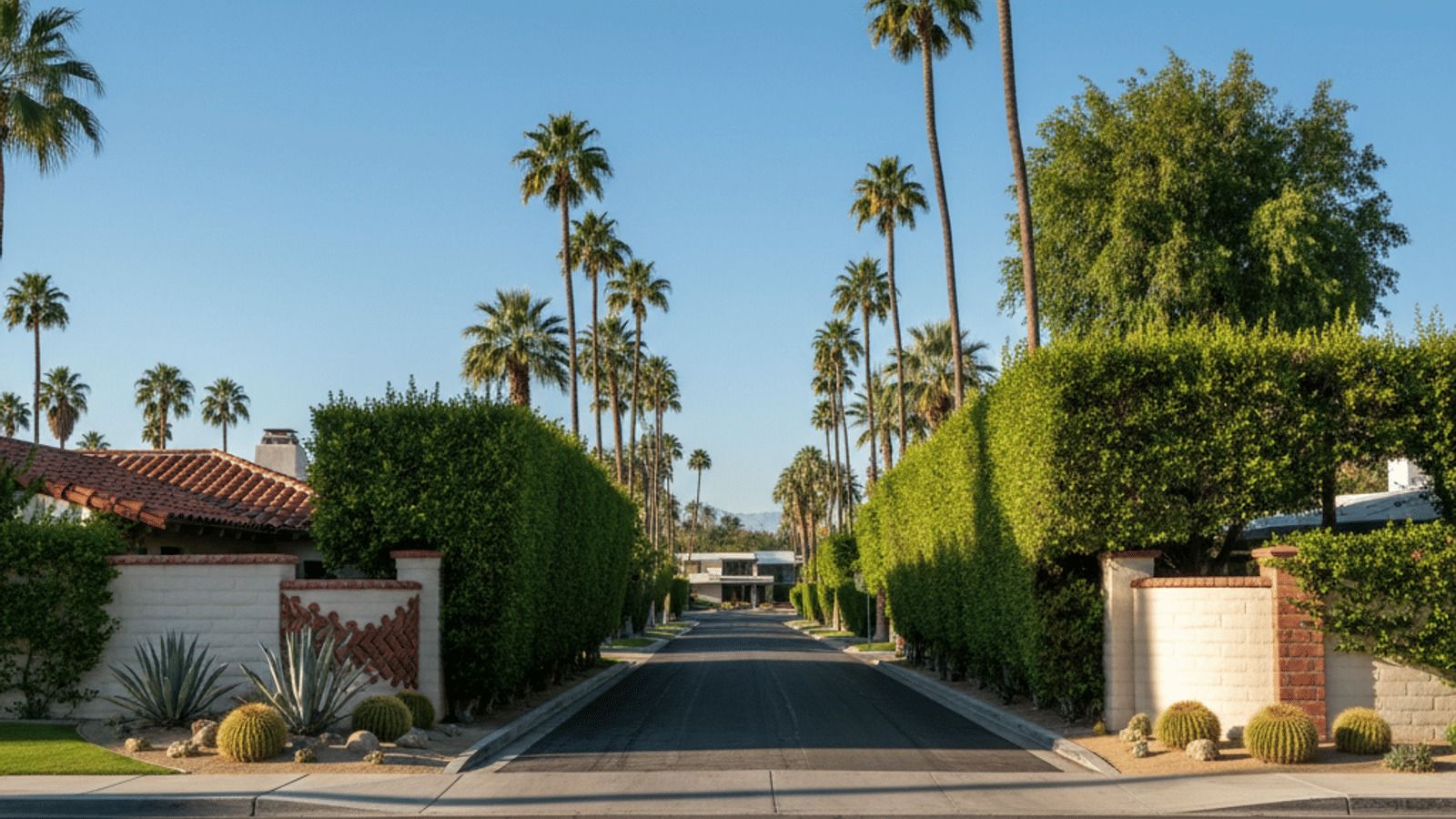
If you are hunting for that quintessential Palm Springs vibe—the kind where you can practically hear the ice clinking in a martini glass just by walking down the street—you need to look closely at the Movie Colony.
This neighborhood is one of the most prestigious pockets in the desert, roughly bordered by Tachevah Drive to the north, Alejo Road to the south, Avenida Caballeros to the east, and Indian Canyon Drive to the west. It’s legendary not just for who used to live here, but for how it lives today.
Unlike many secluded luxury enclaves that feel cut off from the action, the Movie Colony offers a rare blend of estate-style privacy and genuine walkability. You are steps away from the heart of downtown, yet hidden behind tall hedges and privacy walls. Perhaps most importantly for buyers savvy about the local market, the vast majority of this neighborhood is Fee Simple land, meaning you own the dirt your house sits on—a massive selling point in a city where lease land is common.
A Star-Studded History: The Legacy of the Movie Colony
You can’t talk about real estate here without talking about the history. The neighborhood earned its name honestly; back in the 1930s and 40s, this was the playground for Hollywood’s elite.
The development was originally spurred by its proximity to the legendary El Mirador Hotel, which is now the Desert Regional Medical Center. In the "Golden Era," stars flocked here to escape the pressures of Los Angeles while staying within the "30-mile zone" required by studio contracts (well, they stretched the mileage a bit, but the studios looked the other way).
Walking these streets feels like touring a history book of cinema. Frank Sinatra’s famous Twin Palms Estate—with its piano-shaped pool—is here. Cary Grant held court at his estate, Las Palomas. Everyone from Jack Benny to Marilyn Monroe spent time behind these walls.
A great local touchstone that connects this past to the present is Copley’s on Palm Canyon. This award-winning restaurant is actually located in what used to be Cary Grant’s guest house. It perfectly captures the vibe of the area: sophisticated, historically rich, but relaxed enough for a casual Tuesday night dinner.
Movie Colony Real Estate Market Trends (2026)
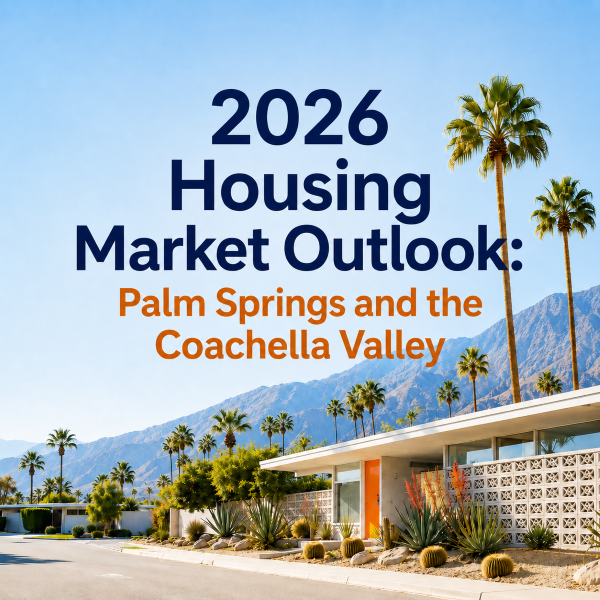
If you’re looking to buy in early 2026, you are entering a market that has found its footing again. After the rollercoaster of the post-pandemic years and a normalization period throughout 2025, we are currently seeing a stable market with modest, sustainable appreciation—forecasted around 3.6% growth this year.
The good news for buyers is that inventory isn't as strangled as it was a few years ago. We are seeing about a 10% rise in listings compared to previous lows, which means you actually have some choices rather than having to wage war over the single available house on the block.
However, this is still a premium neighborhood, and the price tags reflect that. "Entry-level" in the Movie Colony generally means something north of $1.5 million. If you are eyeing one of the larger architectural estates or a historic property, you should budget anywhere from $3 million to over $6 million.
One of the biggest drivers of value here is the land itself. The Movie Colony is known for estate-sized lots—often ranging from a third of an acre to over a full acre. In a town where newer developments often squeeze homes together, having that kind of sprawling yard space hidden behind privacy walls is the ultimate luxury.
Architectural Styles: From Spanish Revival to Modernism
When driving through the Movie Colony, you won't see a "cookie-cutter" look. The streetscape is a beautiful timeline of desert design.
The earliest wave of development in the 1920s and 30s brought us Spanish Colonial Revival architecture. These homes are characterized by red tile roofs, thick white stucco walls, romantic courtyards, and heavy wrought-iron details. They feel grounded, cool, and timeless.
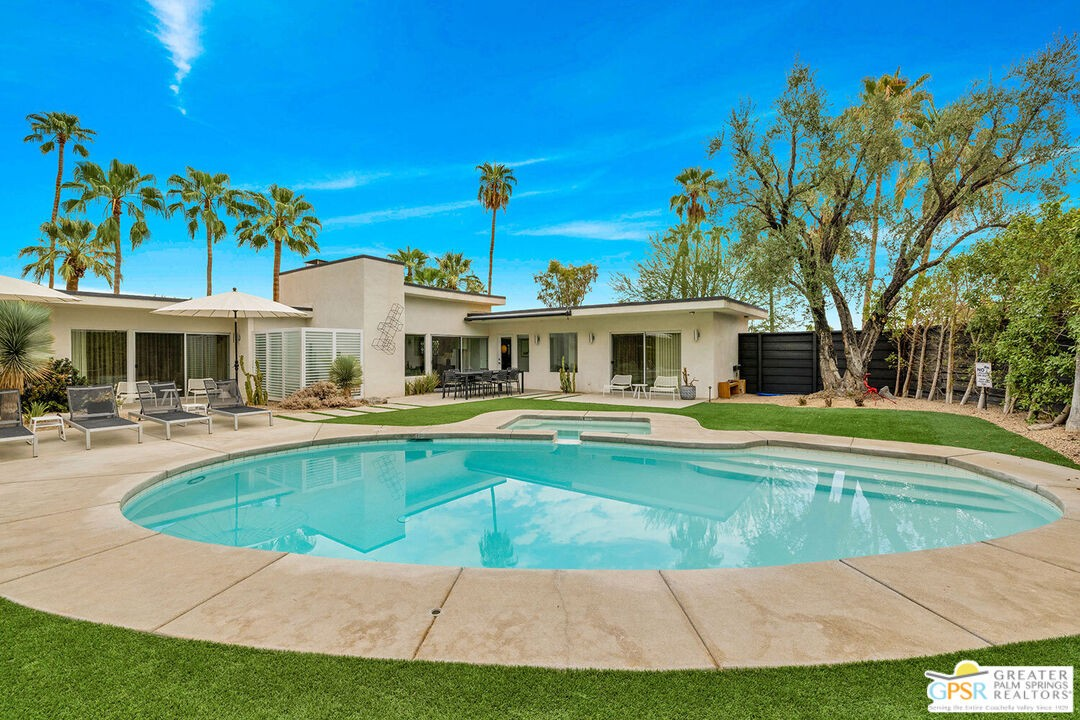
Then came the post-war boom of the 1950s, bringing the Mid-Century Modern style that Palm Springs is famous for. You’ll see low-slung profiles, flat roofs, and walls of glass that dissolve the line between indoor living and the outdoor pool area.
Some of the most notable architects of the century left their mark here, including E. Stewart Williams (who designed Sinatra’s house), William Cody, and Donald Wexler.
Regardless of the style, the unifying aesthetic here is the "walled compound." High hedges and artistic masonry walls are standard. It’s not about curbing appeal for the passerby; it’s about creating a private sanctuary for the resident.
Living in Movie Colony: Lifestyle & Amenities
What makes this neighborhood stick for full-time residents is how easy the lifestyle is. You get the quiet of a suburb with the access of an urban downtown.
Walkability is a huge factor. From most homes here, you can easily walk to the Uptown Design District for a morning coffee at Cheeky’s or a dinner reservation at Birba or Workshop Kitchen + Bar. You don't always need to jump in the car to live your life, which is a luxury in Southern California.
The neighborhood’s "green lung" is Ruth Hardy Park. It’s central to the community and offers tennis courts, a wellness park, jogging trails, and wide-open green spaces. It’s a common sight to see neighbors walking dogs or catching a quick match of tennis in the mornings.
Despite being blocks from the action, the atmosphere inside the residential streets remains incredibly quiet. Because the streets don't generally serve as major cut-throughs for commuters, traffic is low, preserving that tranquil, resort-like feeling.
Important Considerations for Buyers
Before writing an offer, there are a few local nuances you need to be aware of.
Vacation Rentals (STVR): If you are planning to offset your mortgage with Airbnb income, proceed with caution. Palm Springs has very strict short-term vacation rental rules. The Movie Colony has a neighborhood cap of 20%, meaning no more than 20% of homes can be permitted rentals. Furthermore, the city limits new permits to roughly 26 contracts per year for new applicants. You must verify the current cap status before buying if rental income is part of your math.
Noise Ordinance: The city takes tranquility seriously. There are strict 24-hour noise rules, and they are enforced. This keeps the neighborhood peaceful but is something to keep in mind if you plan on hosting loud late-night pool parties.
Wind Exposure: The desert is windy, but location matters. The Movie Colony is centrally located, so it is generally more sheltered than the north end of town (like the Racquet Club area), but you will still get breezy evenings.
Fee Simple vs. Lease Land: Always double-check the land status. While the Movie Colony is predominantly Fee Simple (you own the land), pockets of lease land exist nearby. Buying fee simple land eliminates the monthly land lease payments and the complexity of lease renewal negotiations.
Movie Colony vs. Nearby Neighborhoods
If you aren't 100% sold yet, it helps to compare this area to its neighbors.
Vs. Old Las Palmas: Old Las Palmas is arguably the only neighborhood with more "prestige" and even larger estates. It is more secluded and generally more expensive. However, it sits a bit further back against the mountains, making it a slightly longer walk to the downtown core compared to the immediate access of the Movie Colony.
Vs. Movie Colony East: This is the most common confusion. Movie Colony East (formerly known as the Ruth Hardy Park neighborhood) is adjacent but distinct. It generally offers more accessible price points and has a more open, suburban feel. You see fewer high "compound" walls and more visible front lawns. If you want the location without the multi-million dollar "estate" price tag, Movie Colony East is a fantastic alternative.
Frequently Asked Questions
Is the Movie Colony in Palm Springs on lease land?
Most of the Movie Colony is on Fee Simple land, meaning you own the land outright. This is a significant financial advantage over other Palm Springs neighborhoods that sit on Indian Lease Land, though you should always verify the specific parcel with your title officer.
Can you do vacation rentals in the Movie Colony?
Yes, but it is difficult. The neighborhood is subject to the city's strict cap, which limits vacation rentals to 20% of the residential units in the area. With the additional limit on the number of contracts issued citywide per year, it is not a guaranteed investment strategy.
What is the difference between Movie Colony and Movie Colony East?
The original Movie Colony is known for larger, walled estates and higher price points, often housing the historic celebrity compounds. Movie Colony East (formerly Ruth Hardy Park neighborhood) has a more open, suburban feel with fewer privacy walls and generally more attainable home prices.
Is the Movie Colony walkable to downtown Palm Springs?
Yes, it is one of the most walkable luxury neighborhoods in the city. Residents can easily walk to the Uptown Design District and downtown Palm Springs for dining, shopping, and entertainment, which is a major lifestyle perk.
Selling Your Home?
Get your home's value - our custom reports include accurate and up to date information.