
Huddle’s Springs Restaurant: Architecture, Art, and the Many Lives of a Lost Palm Springs Icon
LOST PALM SPRINGS: Palm Springs’ midcentury story isn’t told only through houses and hotels. It also lives in the places where people gathered every day — restaurants, cafés, lounges — buildings that shaped social life as much as architecture books. Few of those places captured the optimism, creativity, and constant reinvention of Palm Springs quite like Huddle’s Springs Restaurant, designed in 1957 by architect William F. Cody.
Over its lifetime, the building lived many lives — modern diner, Googie landmark, tiki destination, and eventually a deli — all while retaining a remarkable architectural and artistic pedigree that made it far more than “just a restaurant.”
William F. Cody and a Bold Vision for Desert Modernism
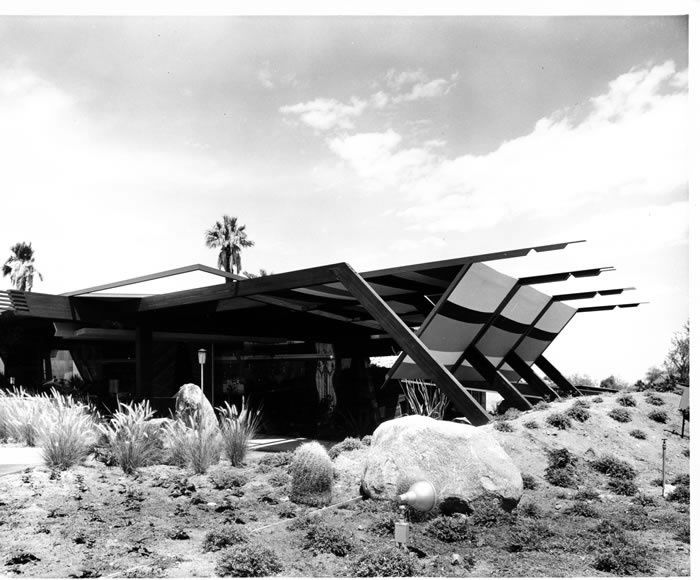
When the building opened in 1957, it was known simply as The Springs. Designed by William F. Cody, one of the most prolific and influential architects in Palm Springs, the restaurant was a striking example of desert modernism infused with Googie flair.
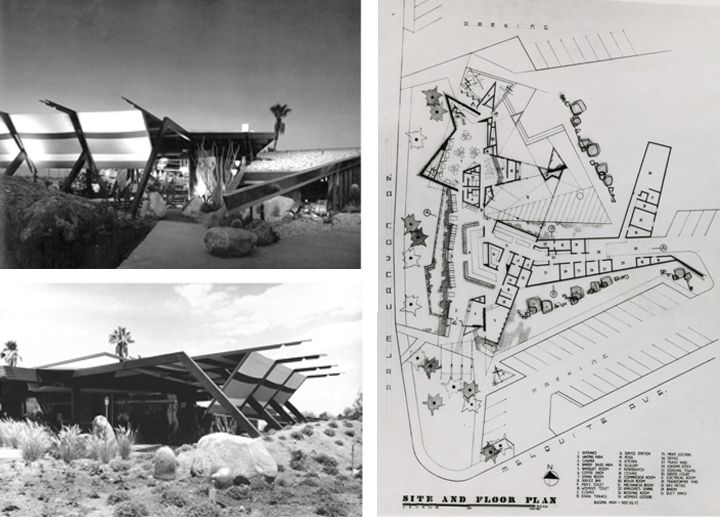
Cody’s design featured:
- Dramatically angled roof planes that seemed to float
- Expansive glass walls that dissolved the boundary between indoors and out
- A low-slung, horizontal form that responded naturally to the desert landscape
- A strong roadside presence meant to capture attention from passing motorists
This was architecture meant to be experienced casually — a place you might stop for breakfast or coffee — yet it carried the same ambition Cody brought to hotels, country clubs, and civic projects. It reflected Palm Springs at mid-century: confident, forward-looking, and unafraid of expressive design.
Art as Architecture: The Millard Sheets Mosaics
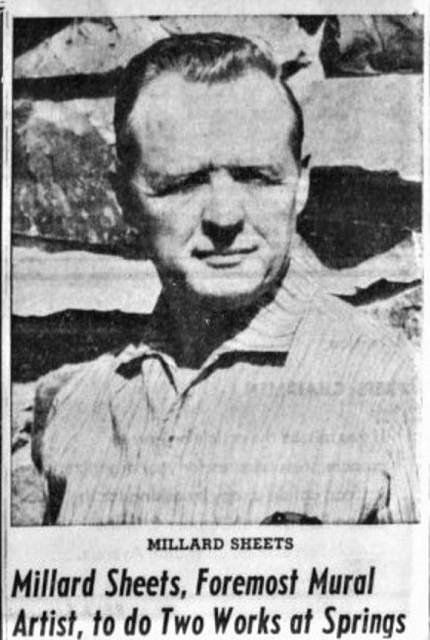
What truly elevated The Springs beyond even other Googie-era restaurants was its integrated artwork.
From the beginning, the building incorporated custom ceramic tile mosaics created by the studio of Millard Sheets, one of California’s most significant mid-century artists and muralists. Sheets and his studio were responsible for dozens of iconic public artworks throughout the state, including the celebrated Home Savings & Loan mosaics.
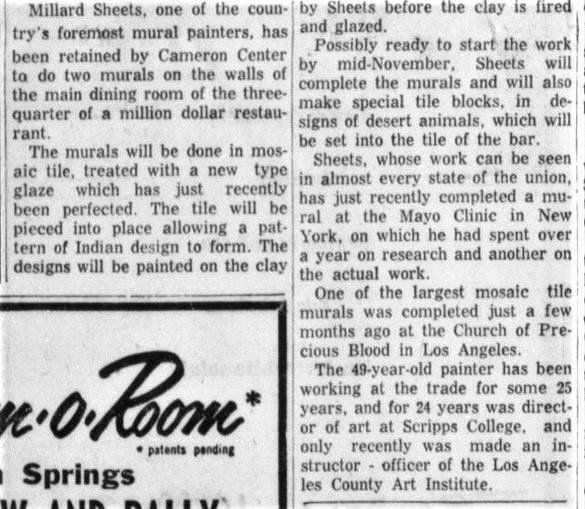
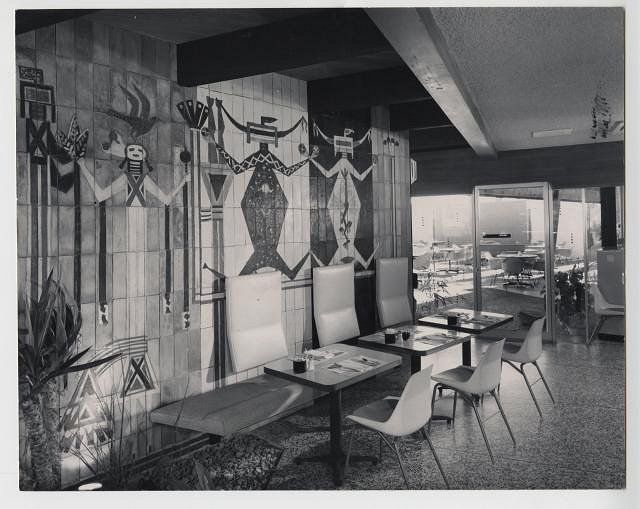
An inventory of Millard Sheets Studio commissions documents:
“‘The Springs’ restaurant, Palm Springs, CA, 1956 – three ceramic tile panels”
These mosaics were not decorative afterthoughts. They were designed specifically for the building — wrapping interior walls and anchoring key spaces with color, texture, and movement. Abstract forms, natural imagery, and bold mid-century palettes transformed the restaurant’s interior into a kind of everyday gallery, where art and daily life intersected.
In classic mid-century California fashion, architecture and art were treated as equals — Cody’s soaring rooflines setting the stage, Sheets’ mosaics adding warmth, humanity, and visual rhythm.
From The Springs to Huddle’s Springs
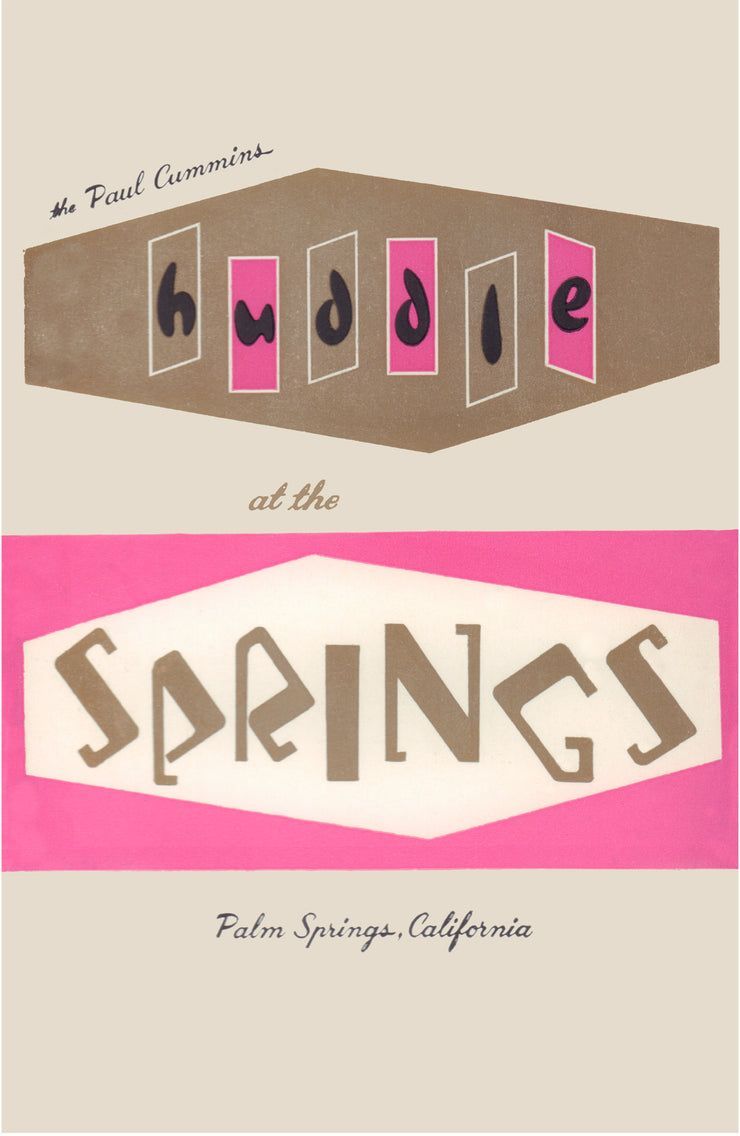
Not long after opening, the restaurant was leased by the Huddle Restaurant chain, a Los Angeles–based operation. With that lease came a new name: Huddle’s Springs.
While the branding shifted, the building itself — architecture and mosaics included — remained largely intact. Huddle’s Springs became a popular local gathering spot, serving as both a neighborhood restaurant and a destination for visitors drawn to its distinctive design.
Aloha Jhoe’s: The Tiki Era Arrives
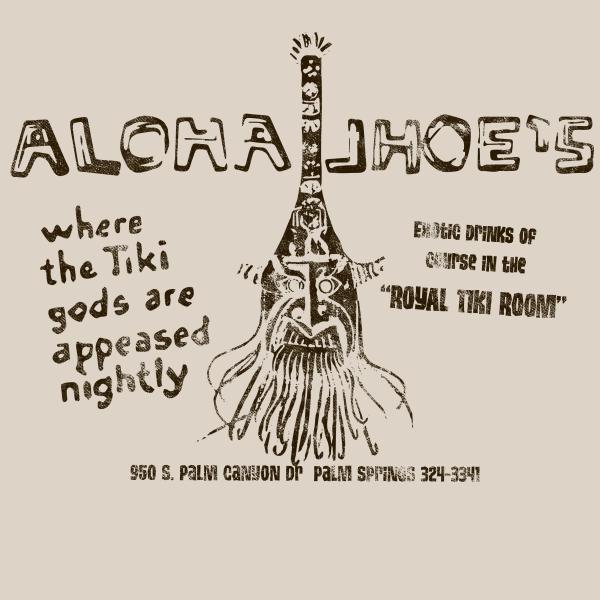
By the end of the 1950s, Palm Springs — like much of California — was swept up in the tiki craze. In 1959–60, the restaurant underwent a major remodel and reopened as Aloha Jhoe’s, a Polynesian-themed dining and lounge experience.
What’s fascinating is that despite the dramatic thematic shift:
- The Cody-designed structure remained the framework
- Much of the Millard Sheets mosaic artwork appears to have survived, reused or recontextualized within the tiki environment
Rather than erase the building’s modernist roots, Aloha Jhoe’s layered a new cultural moment on top of them. The restaurant became a hybrid — mid-century modern bones infused with mid-century escapism.
1968: Sherman’s Deli Takes Over
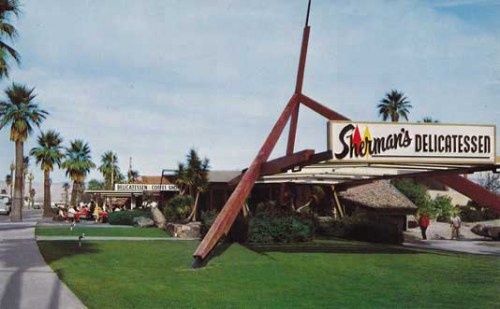
In 1968, the lease was purchased by Sherman Harris, founder of what would become the beloved Palm Springs institution Sherman’s Deli & Bakery. The building briefly operated as Sherman’s Deli South.
This transition marked another shift — from themed dining back to a straightforward neighborhood restaurant — but once again, the structure adapted. The building’s openness, generous interior spaces, and prominent location continued to serve its evolving purpose.
Eventually, Sherman’s relocated to other locations in Palm Springs, and the original Cody-designed building was vacated.
After Sherman’s: Decline and Demolition
In the decades that followed, the site changed hands amid broader redevelopment along Palm Canyon Drive. Unlike many of Palm Springs’ residential mid-century landmarks, commercial buildings like this one were far more vulnerable.
Despite:
- Its architectural pedigree
- Its association with William F. Cody
- Its commissioned artwork by Millard Sheets
the building was ultimately demolished in the 1990s. With it went the mosaics, the rooflines, and the layered history of one of Palm Springs’ most expressive mid-century restaurants.
Why Huddle’s Springs Still Matters
Huddle’s Springs is more than a nostalgic footnote. It tells a larger story about Palm Springs itself:
- Great design once lived in everyday places, not just luxury homes
- Art was integrated into daily life, accessible to anyone who walked in for a meal
- Buildings evolved with culture, adapting from modern diner to tiki lounge to deli
- And ultimately, preservation came too late
Today, Huddle’s Springs survives only in photographs, drawings, menus, and memories — but it remains a powerful reminder of how architecture, art, and community once converged in even the most casual corners of mid-century Palm Springs.
Lost Palm Springs is an ongoing series from The Paul Kaplan Group, exploring the buildings, places, and spaces that once shaped daily life in the desert — and the stories they still tell. Through architecture, art, and memory, we document what’s been lost, what survives in fragments, and why these places continue to matter. Because understanding where Palm Springs has been helps us better appreciate what remains — and what’s worth protecting.
Sources & References
Research for this article draws from a combination of archival publications, preservation resources, and historical documentation, including materials from the Palm Springs Preservation Foundation, Palm Springs Life, Los Angeles Times, The Desert Sun, and Cal Poly San Luis Obispo’s Robert E. Kennedy Library Special Collections (William F. Cody and Millard Sheets Studio archives). Additional context was informed by Millard Sheets Studio public art inventories, period restaurant ephemera and menus from Vintage Menu Art, and mid-century architectural and tiki-era historical references. All dates, attributions, and design details reflect the best available documentation at the time of publication.
Selling Your Home?
Get your home's value - our custom reports include accurate and up to date information.